Why Is a Fast AMT Gearbox Ideal for Global Buyers?

Time:2026-09-18 Author:Mason
0%

Global buyers are reassessing how vehicles balance fuel economy, price, comfort, and serviceability. A Fast AMT Gearbox offers a practical response. It combines automated clutch control with rapid gear changes. Drivers gain easier operation, especially in congested city streets. Fleet owners can also reduce shift-related fatigue and inconsistent driving habits.

The International Energy Agency reported that electric cars exceeded 18% of global new-car sales in 2023. That transition is real, but internal-combustion and hybrid vehicles still serve many markets. The IEA also highlights major differences in charging access, vehicle affordability, and regional infrastructure. Therefore, one drivetrain solution cannot satisfy every buyer. Research from S&P Global Mobility and MarketsandMarkets also points to continuing demand for automated transmissions in commercial and passenger vehicles. Their forecasts vary. That uncertainty deserves attention.

Dr. Peter Holdmann, a long-time powertrain technology specialist, has stated, “A gearbox must serve the vehicle, not merely shift gears.” That principle explains the appeal of a Fast AMT Gearbox. Its value depends on calibration, clutch durability, thermal control, and local repair support. A fast shift alone is not enough. In a hot workshop, technicians need readable diagnostics and accessible components. On a steep road, software must prevent harsh engagement and unnecessary clutch wear. Some buyers may still prefer a conventional automatic for smoother low-speed behavior. That is a fair criticism. Yet, for global fleets seeking controlled costs, efficient operation, and familiar mechanical architecture, a Fast AMT Gearbox remains a compelling option.
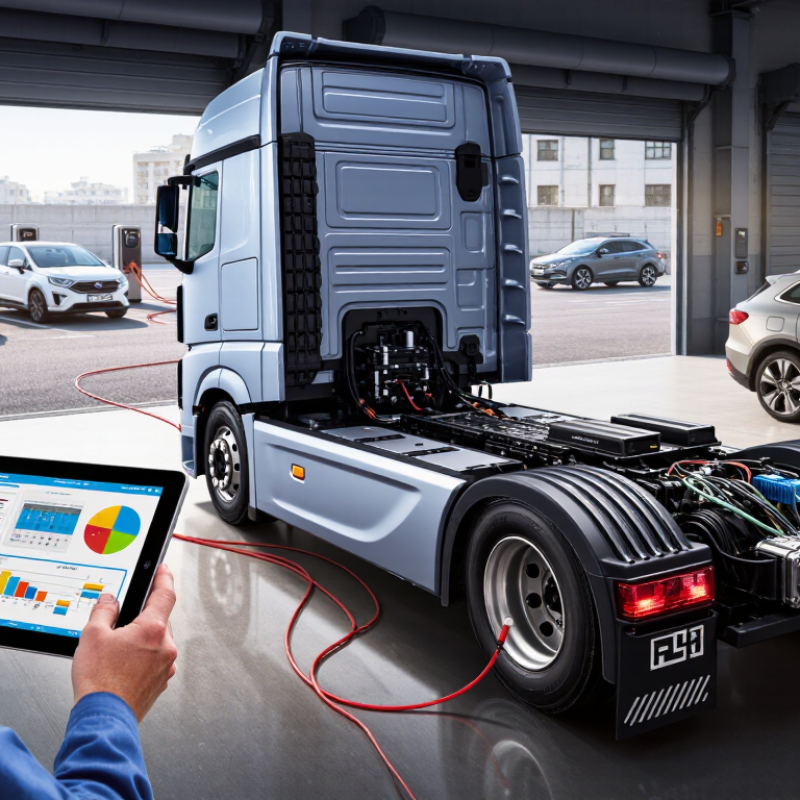
Why Is a Fast AMT Gearbox Ideal for Global Buyers?

What Is a Fast AMT Gearbox?

Why Is a Fast AMT Gearbox Ideal for Global Buyers?

What Is a Fast AMT Gearbox?

A fast AMT gearbox is an automated manual transmission that changes gears with electronic control. It uses actuators to operate the clutch and shift forks. Unlike a conventional automatic transmission, it does not rely on a torque converter. This structure can reduce mechanical losses, weight, and production complexity.

“Fast” mainly describes shift response and clutch coordination. In practical driving, the system may complete a gear change within a fraction of a second. The exact time depends on engine torque, actuator design, software calibration, and vehicle load. It is not a universal number. Fast shifting can also feel harsh when calibration is weak.

The 2024 Automotive Transmission Market report by MarketsandMarkets projects continued growth in transmission demand, supported by commercial vehicles and developing transport markets. A 2024 report from Research and Markets also identifies automated manual transmissions as a cost-efficient option for medium and heavy vehicles. These findings matter to global buyers facing fuel, maintenance, and driver-training pressures.

A properly calibrated AMT can select gears consistently on highways, slopes, and congested roads. It may also reduce driver fatigue during long-distance operation. However, buyers should examine clutch durability, actuator response, local service capability, and software adaptability. A low purchase price is not enough. In hot climates, heavy traffic may expose weaknesses that laboratory tests miss.

How Does a Fast AMT Gearbox Work?

Why Is a Fast AMT Gearbox Ideal for Global Buyers?

How Does a Fast AMT Gearbox Work?

A fast automated manual transmission uses a conventional manual gearbox with automated control. Sensors monitor engine speed, input speed, vehicle speed, throttle position, and clutch travel. The transmission control unit reads these signals within milliseconds. It then commands electric or hydraulic actuators to operate the clutch and shift forks.

During an upshift, the controller reduces engine torque, releases the clutch, selects the next gear, and restores torque. Good calibration makes the process feel smooth. Poor calibration creates hesitation, noise, or a sharp jerk. The system is quick, but not magically perfect.

Shift speed depends on actuator response, software logic, gear design, and clutch temperature. In practical testing, technicians often check repeated starts, hill launches, and low-speed traffic. These conditions reveal weaknesses that laboratory cycles can miss. That matters for international buyers facing different roads, loads, and driving habits.

OICA recorded about 93.5 million motor vehicles produced worldwide in 2023. This wide market requires compact, efficient, and serviceable transmission solutions. The IEA’s Global EV Outlook 2024 reported nearly 14 million electric cars sold in 2023. However, combustion and hybrid vehicles remain important across many regions. A fast AMT can reduce driver effort while preserving the mechanical efficiency of a manual gearbox. Its real advantage appears in daily use: cleaner launches, shorter shifts, and controlled fuel consumption. Calibration still needs refinement. That is the honest part.

Which Performance Benefits Matter to Global Buyers?

For global buyers, a fast automated manual transmission (AMT) matters when traffic, gradients, and payloads change daily. It combines clutch-based efficiency with electronically controlled gear changes. Quick shifts can reduce power gaps during overtaking or hill climbs. They may also help keep the engine near its efficient operating range. In a loaded vehicle, that can support steadier fuel use and smoother progress. The benefit is practical. Less interruption.

Buyers should examine measured shift time, launch control, and low-speed behavior, not brochure speed alone. A well-calibrated AMT can select gears predictably in city congestion and on long highway routes. Hill-start assistance can reduce rollback and driver stress on steep roads. Torque management also protects the clutch during repeated stops, although poor calibration may create hesitation or harsh engagement. Test it cold, hot, empty, and fully loaded. Real roads expose weaknesses.

Global operation adds other performance concerns. The gearbox should retain consistent responses across heat, dust, altitude, and uneven road surfaces. Clear diagnostics and accessible service procedures improve uptime when local technicians have limited training. Remote software support can help, but it should not replace physical inspection. Buyers may also value manual override for unusual gradients or slippery surfaces. Faster is not always better. A rushed shift can feel impressive yet reduce control. The strongest choice balances response, durability, efficiency, and repairability for the intended route.

Why Is a Fast AMT Gearbox Ideal for Global Buyers? - Which Performance Benefits Matter to Global Buyers?

Performance Dimension Typical AMT Engineering Range Why It Matters to Global Buyers Practical Purchasing Implication
Automated shift response Approximately 200–500 ms for an optimized upshift event Reduces interruption of drive force and supports smoother acceleration in urban traffic, on grades, and during frequent stop-start operation. Request measured shift-time data under defined torque, temperature, and load conditions rather than relying only on marketing claims.
Mechanical transmission efficiency Typically about 94–98% at steady operating points, excluding engine and final-drive losses A mechanical AMT can retain the efficiency advantage of a manual gearbox while providing electronic shift control. Compare efficiency maps at the vehicle’s normal speed, payload, and duty cycle instead of using peak efficiency alone.
Fuel or energy-use potential Commonly 3–10% potential improvement versus an equivalently operated manual system; results vary by route and driver behavior Automated gear selection helps keep the engine closer to an efficient speed and load range, especially across large fleets. Ask for controlled fuel-consumption test results using the same engine, axle ratio, vehicle mass, route, and ambient conditions.
Available forward-speed ratios Common commercial configurations range from 6 to 12 forward speeds More ratios can improve launch performance, grade climbing, cruising efficiency, and compatibility with different vehicle weights. Select the ratio spread and final-drive combination according to payload, road gradient, maximum speed, and regional regulations.
Torque and vehicle application range Light- and medium-duty units commonly cover roughly 250–1,000 N·m; heavy-duty designs may exceed 2,000 N·m A suitable torque rating supports dependable operation across passenger vehicles, delivery fleets, buses, construction vehicles, and trucks. Verify continuous input torque, peak torque duration, gross combination weight, clutch capacity, and derating at high temperature or altitude.
Clutch wear and service life Dry-clutch service life is highly duty-cycle dependent; many fleet applications target approximately 150,000–300,000 km before replacement Electronic clutch control can reduce driver-induced abuse, overheating, and inconsistent engagement. Evaluate clutch temperature protection, replacement access, local parts availability, and the manufacturer’s warranty conditions.
Operating temperature capability Automotive systems are commonly engineered for approximately −40°C to +50°C ambient operation, subject to configuration A broad temperature range supports export to cold, tropical, desert, and high-altitude markets. Confirm cold-start performance, thermal derating, cooling requirements, sealing level, and validation results for the destination climate.
Hill-start and low-speed control Electronic creep, launch, and hill-hold functions can be calibrated for gradients commonly reaching 20–30% in commercial applications Improves drivability and reduces rollback risk for inexperienced drivers, particularly in mountainous or congested regions. Check validated gradeability with the intended payload, tire size, axle ratio, and parking-brake system.
Electronic integration and diagnostics Typically supports CAN-based communication, fault-code storage, shift adaptation, and telematics integration Standardized diagnostics can shorten troubleshooting time and improve fleet uptime across multiple markets. Confirm communication protocols, diagnostic-tool access, software-update procedures, cybersecurity controls, and technician training support.
Note: The figures shown are representative engineering ranges compiled for comparison. Actual performance depends on vehicle mass, engine torque curve, clutch design, software calibration, ambient conditions, road gradient, maintenance, and operating cycle.

How Does It Adapt to Different Driving Conditions?

Why Is a Fast AMT Gearbox Ideal for Global Buyers?

How Does It Adapt to Different Driving Conditions?

A fast automated manual transmission adapts through sensors, shift maps, and precise clutch control. It reads speed, engine load, throttle position, and road incline. This helps it select suitable gears before conditions become demanding.

Traffic exposes it.

In crowded city streets, the gearbox can reduce unnecessary gear changes and control clutch engagement smoothly. On steep roads, hill-start assistance can limit rollback and reduce clutch heat. Drivers carrying heavy loads may notice firmer, slower shifts, which protect mechanical components. That trade-off is useful, even if it feels less refined.

Regional conditions require deeper testing. In hot climates, transmission cooling becomes important during long climbs or repeated stop-and-go driving. Cold weather may require gentler engagement until fluids reach working temperature. Loose gravel, wet roads, and uneven surfaces also benefit from controlled torque delivery. A manual override can help drivers hold a lower gear on descents or rough tracks.

Calibration is never perfect everywhere. A setting that feels quick on smooth highways may seem abrupt in a crowded market. Engineers should compare local driving data, payload patterns, and road grades before finalizing shift behavior. Buyers should request durability records and service guidance, not only acceleration figures. Real roads are rarely as predictable as test tracks.

Why Is a Fast AMT Gearbox Ideal for Global Buyers?

How Does It Adapt to Different Driving Conditions?

Representative posted-speed ranges vary by jurisdiction: urban roads commonly operate around 30–50 km/h, rural roads around 60–90 km/h, and motorways around 100–130 km/h. A fast AMT gearbox can adapt by selecting lower gears for frequent urban stops, balanced ratios for rural driving, and higher gears for steady motorway cruising.

What Should Buyers Consider Before Choosing One?

A fast AMT gearbox can reduce shift delays and improve driving comfort.

Yet speed alone should not decide a global purchase. Buyers should match the gearbox with vehicle weight, engine torque, road quality, and daily operating patterns. A delivery van in crowded streets needs different calibration from a long-haul truck.

Check measured shift time, clutch life, and fuel results under realistic loads. Ask for test records, not only brochure figures. Test drives matter. Pay attention to low-speed hesitation, hill starts, reverse control, and noise during repeated shifts. A gearbox that feels smooth when empty may behave differently with a full trailer.

Climate and service access also deserve close attention. Dust, heat, freezing temperatures, and steep roads can expose weak thermal control or software settings. Confirm the availability of trained technicians, diagnostic tools, replacement parts, and clear warranty terms in each target market. Local regulations may also affect emissions, safety systems, and electronic communication.

Do not ignore total ownership cost. A lower purchase price can become expensive if clutch replacement is frequent. Training is another factor, because poor driving habits can shorten component life. Some published performance claims may not fit every region. That deserves scrutiny. Buyers should request application-specific data and allow time for independent inspection. Even experienced purchasing teams can underestimate software updates and local repair delays. Industry assumptions are not always reliable.

FAQS

What is a fast AMT gearbox?

It is an automated manual transmission using electronic controls, actuators, and a conventional manual gearbox. It has no torque converter. “Fast” describes shift response, not a guaranteed time.

How does a fast AMT gearbox change gears?

Sensors monitor engine speed, vehicle speed, throttle position, and clutch movement. A control unit commands the clutch and shift forks. The process happens within milliseconds.

How quickly can it shift gears?

Some shifts may finish within a fraction of a second. The exact time depends on torque, software, actuators, temperature, and vehicle load. There is no universal figure.

Can a fast AMT gearbox provide smooth driving?

Good calibration can create clean launches and short shifts. Weak calibration may cause hesitation, noise, or sharp jolts. Calibration matters.

What benefits can global buyers expect?

The system can reduce driver fatigue during long routes. It may also lower mechanical losses, vehicle weight, and training demands. Daily traffic reveals its value.

Is a fast AMT gearbox suitable for heavy vehicles?

It can suit medium and heavy vehicles seeking efficient operation. Buyers should check clutch durability, actuator strength, and performance under heavy loads. Suitability varies.

How does climate affect AMT performance?

Hot weather and congested traffic can increase clutch stress. Hill starts may expose weaknesses quickly. Laboratory results are not enough.

What should buyers inspect before purchasing?

Review shift quality, clutch life, software adaptability, and local service support. Test repeated starts, slopes, and slow traffic. A low purchase price can mislead.

Does a fast AMT gearbox always save fuel?

It can support controlled fuel consumption through consistent gear selection. Results depend on driving habits, vehicle weight, road conditions, and calibration. Not always.

Conclusion

A Fast Amt Gearbox is an automated manual transmission designed to combine the mechanical efficiency of a manual gearbox with the convenience of automatic shifting. It uses electronic controls, sensors, and actuators to manage clutch operation and gear changes with minimal driver input. This design can support quick shifting, responsive acceleration, improved fuel efficiency, and reduced driving fatigue, making it attractive to global buyers seeking practical performance and operating value.

Its adaptability allows the transmission to respond to urban traffic, highways, slopes, heavy loads, and changing weather conditions through suitable shift strategies. Before choosing a Fast Amt Gearbox, buyers should evaluate vehicle compatibility, torque capacity, shift smoothness, maintenance requirements, control-system reliability, operating climate, service availability, and total ownership cost. Careful comparison of these factors helps ensure the gearbox meets local driving habits, regulations, road conditions, and long-term transportation needs.


Mason

Mason

Mason is a seasoned marketing professional with a deep expertise in the company's offerings and a passion for driving brand awareness. With a strong background in digital marketing strategies, he has an innate ability to connect with diverse audiences and effectively communicate product benefits.......