Choosing a Cylinder Block supplier in 2026 means assessing more than price and quoted lead time. The part’s casting quality, bore geometry, deck flatness, and coolant-jacket integrity can affect engine durability and assembly consistency. OICA reported more than 93.5 million motor vehicles produced worldwide in 2023, illustrating the scale of the market these components serve. That figure covers vehicles, not cylinder-block demand, so it should be treated as context rather than a direct forecast.
The market is also changing. The International Energy Agency’s Global EV Outlook 2025 projects electric-car sales will exceed 20 million in 2025, adding pressure on suppliers to adapt product portfolios and production planning. Yet combustion engines remain important across many vehicle, industrial, and replacement-part applications. Buyers should compare materials, machining capability, inspection records, batch traceability, and realistic delivery performance. Ask for evidence: dimensional reports, pressure-test records, and clear documentation of process controls. A polished catalogue is not proof of consistent output. Not every shortlist will be perfect. Even reliable suppliers can face capacity constraints or communication gaps, and those risks deserve honest scrutiny. The sections ahead introduce leading global suppliers and practical criteria for evaluating them, while recognizing that suitability depends on the buyer’s engine design, volume, and quality requirements.
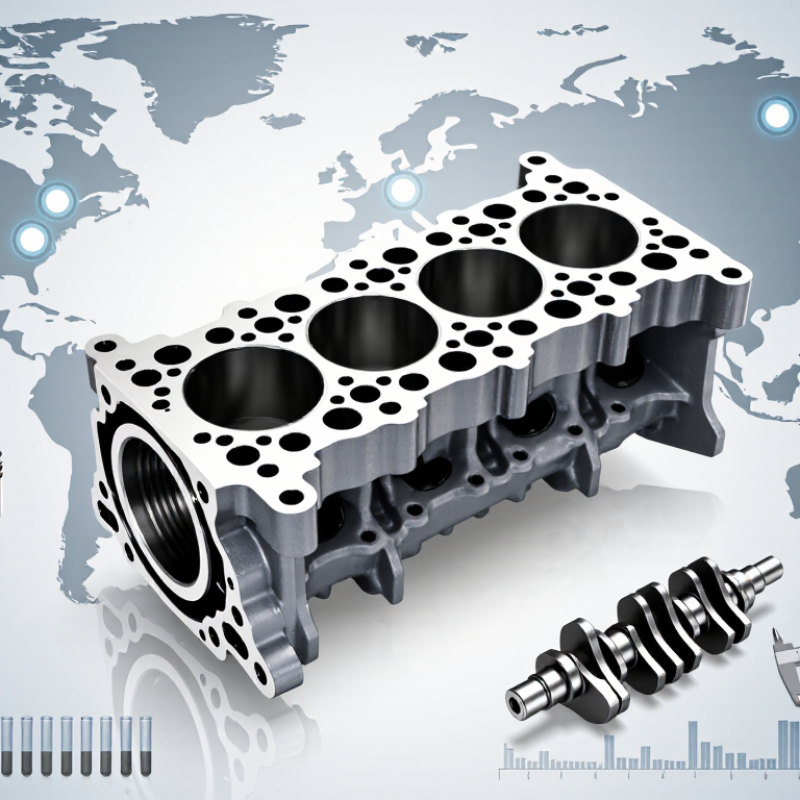
A cylinder block is the engine’s main structural body. It houses the cylinders, where pistons move up and down during operation. It also supports parts such as the crankshaft and cylinder head. In many engines, internal passages carry coolant and lubricating oil around critical areas. The block must withstand heat, pressure, and repeated vibration. It is the foundation.
As the fuel-air mixture burns, expanding gases push each piston downward. The connecting rod transfers that motion to the crankshaft, which produces rotational power. Meanwhile, coolant helps control temperature, and oil reduces friction between moving surfaces. A damaged or poorly machined cylinder bore can cause uneven wear, oil consumption, or reduced compression. Small details matter. Materials and designs vary, so service limits should be checked against the engine’s technical specifications rather than guessed.
Tips: During inspection, look for cracks, corrosion, and damage around the deck surface and cylinder bores. Check that oil and coolant passages are clear. Measurement tools can reveal bore wear that a visual check may miss. A clean block can still be out of tolerance; that distinction is easy to overlook.
For global buyers, cylinder-block material shapes weight, heat control, machining effort, and service life. Aluminum alloys weigh about 2.7 g/cm³, while cast iron is roughly 7.2 g/cm³, according to ASM International materials data. The U.S. Department of Energy’s Vehicle Technologies Office identifies lightweight materials, including aluminum, as a vehicle-efficiency strategy.
But lighter is not automatically wiser.
Aluminum expands more with heat, so block design must manage bore distortion and head-gasket sealing.
Manufacturing choices matter just as much. Gray-iron blocks are commonly sand-cast, then machined to create accurate bores, bearing seats, and oil passages. Aluminum blocks may use sand, permanent-mold, or low-pressure casting; some designs add iron liners or coated bores to resist wear.
Compacted graphite iron offers higher strength than conventional gray iron, but requires tighter process control and can raise production cost.
A practical detail: ask suppliers how they inspect hidden water jackets and verify bore geometry after machining. The data sheet rarely tells the whole story.
DOE lightweighting research supports aluminum’s role in mass reduction, while ASM property tables explain its density advantage; neither source alone predicts durability in a specific engine. Compare casting consistency, heat treatment, machining tolerances, and traceable inspection records—not material labels alone.
For global buyers, a reliable cylinder block supplier proves consistency beyond a polished sample. Ask how the supplier controls casting, machining, and inspection across full production runs. Request dimensional reports for critical features, such as bore alignment and deck flatness. A clean-looking part is not enough.
Material traceability matters. The supplier should identify the alloy grade and link production batches to inspection records. Ask whether blocks receive suitable checks for porosity, cracks, and machining defects. Review sample reports, not just assurances. Small details count.
Lead times and communication also define reliability. Confirm production capacity, packaging methods, and how defects or delays are handled. Clear answers are useful; vague promises are not. A sample can look excellent, yet later batches may vary. No checklist catches everything, so buyers should compare records with physical samples and keep expectations realistic. Even experienced purchasing teams can miss a weak point when schedules are tight.
Use this supplier-assessment framework to compare cylinder block manufacturers without relying on company or brand names. Suggested weights are a starting point; adjust them to the engine design, application, and customer requirements.
| Evaluation Factor | What to Verify | Useful Evidence | Practical Evaluation Guide | Suggested Weight |
|---|---|---|---|---|
| Quality management system | Whether production controls, corrective actions, document control, and internal audits are established and maintained. | Current ISO 9001 certificate and its scope; audit results; corrective-action records. For automotive supply, check whether IATF 16949 certification is required by the customer or contract. | Verify certificate validity, issuing body, covered manufacturing site, and product scope. Certification supports assessment but does not replace product-specific qualification. | 15% |
| Material and metallurgy control | Whether the specified block material, chemistry, mechanical properties, and heat-treatment requirements are consistently met. | Material specifications, heat or melt records, chemical-analysis reports, hardness or tensile-test results, and procedures for handling nonconforming material. | Compare results with the approved drawing and material specification. Confirm that any material or process substitution receives written approval. | 14% |
| Casting process capability | Whether the selected casting process suits the block’s geometry, material, production volume, and required quality level. | Process flow, casting method and controls, tooling records, defect data, and process-change history. | Assess controls for risks such as porosity, inclusions, shrinkage, and distortion. Confirm how casting defects are detected and dispositioned. | 12% |
| Dimensional control and machining | Whether critical dimensions and machined features meet the drawing requirements, including datum relationships and surface finish. | Inspection plans, calibrated gauge records, dimensional reports, coordinate measuring machine (CMM) results, and capability studies for critical characteristics. | Review data from representative production parts, not only prototypes. Apply capability targets such as Cpk ≥ 1.33 only when specified by the customer or agreed quality plan. | 14% |
| Leak and functional testing | Whether oil, coolant, or other specified passages and interfaces are tested using methods suitable for the part and application. | Approved test procedure, equipment calibration records, acceptance criteria, test results, and reaction plan for failures. | Confirm test medium, pressure or method, duration, and limits against the drawing or customer specification; requirements vary by design. | 10% |
| Traceability and production records | Whether finished blocks can be linked to relevant material batches, production processes, inspection results, and shipment records. | Part marking or identification method, lot records, batch-control procedure, and a sample traceability exercise. | Ask the supplier to demonstrate a trace from a finished part back to its material and production records, and forward to the relevant shipment. | 9% |
| Product validation and change control | Whether the supplier validates the part and controls changes to tooling, material, process, inspection methods, or manufacturing location. | First-article or production-part approval records, customer-required PPAP documentation where applicable, validation plans, and documented change approvals. | Confirm that production begins only after required approvals and that changes are communicated and approved before implementation. | 9% |
| Delivery and capacity planning | Whether the supplier can support forecast demand, production schedules, tooling maintenance, and recovery from disruption. | Capacity plans, lead-time assumptions, delivery-performance records, maintenance plans, and business-continuity arrangements. | Check capacity against the buyer’s forecast and ramp-up plan. Review delivery data over a defined period rather than relying on a single shipment. | 7% |
| Cost transparency and total cost | Whether quotations clearly identify tooling, machining, testing, packaging, logistics, and other relevant cost elements. | Itemized quotation, tooling ownership terms, payment terms, packaging specification, and documented assumptions for volume and delivery. | Compare total landed cost and commercial assumptions, not unit price alone. Clarify how material, volume, or engineering changes affect pricing. | 5% |
| Environmental and compliance controls | Whether applicable environmental, chemical, and product-compliance obligations are identified for the target market and application. | Relevant permits, environmental management documentation, customer-required material declarations, and applicable compliance records. | Verify requirements for the specific destination and end use. ISO 14001 certification may support environmental management but is not a substitute for legal compliance. | 5% |
Finding leading cylinder block suppliers worldwide takes more than comparing unit prices. Ask about the block’s material grade, casting process, machining tolerances, and inspection methods. Request sample inspection reports and confirm that each report matches the production specification. Traceability matters. A dependable supplier should explain how it links material batches to finished parts. Check production capacity, packaging, delivery estimates, and how technical questions are handled. Clear, specific answers are more useful than polished promises.
Tips: Compare quotations against the same drawing, tolerance range, and inspection requirements. Ask for a sample or recent quality records. Check details carefully.
Supplier evaluation is rarely perfect. A factory visit may show only one production line, while a sample cannot reveal every batch variation. Consider using an independent inspection for an initial order, especially when dimensions affect engine assembly. Discuss how defects are recorded and resolved before placing the order. Also assess communication across time zones; a small misunderstanding about a bore measurement can cause costly rework. Keep notes on unanswered questions. They can reveal gaps your price comparison misses.
How to Identify Leading Cylinder Block Suppliers Worldwide
How to use this chart: These suggested weights form a practical buyer-assessment framework, not measured market rankings or supplier performance data. Compare candidates using documented evidence such as quality-system records, material specifications, validation results, production capacity, compliance documentation, and commercial terms. Adjust the weights to fit your application and sourcing priorities.
Global buyers comparing cylinder block suppliers should inspect evidence, not polished claims. The ISO Survey 2023 recorded about 1.26 million valid ISO 9001 certificates worldwide. That signals broad adoption of quality systems, but certification alone cannot confirm bore roundness or deck flatness. Ask for inspection records tied to the actual production lot. Check material grade, hardness results, and machining tolerances against your drawing. A sample report is useful; a traceable batch report is better. Small gaps matter.
Pricing needs the same close reading. Compare tooling charges, minimum order quantities, packaging, payment terms, and the cost of rejected parts. Ask whether the quote covers inspection and export packing. A low unit price can hide expensive rework. Delivery deserves equal scrutiny: the World Bank’s Logistics Performance Index 2023 reported an average of 44 days for international shipments to travel from export-country entry to destination-country entry. That is a broad benchmark, not a supplier promise. Request separate production and transit estimates, plus the named shipping point and buffer days. Then compare landed cost and delivery risk side by side. I would still leave room for doubt: forecast dates can shift when castings need corrective machining.
Aluminum alloy weighs about 2.7 g/cm³, while cast iron is roughly 7.2 g/cm³. A lighter block may reduce vehicle mass, but weight alone does not determine suitability.
No. Aluminum expands more when heated, so the design must control bore distortion and support head-gasket sealing. Small changes matter.
Gray-iron blocks are commonly sand-cast. Aluminum blocks may use sand, permanent-mold, or low-pressure casting. Some use iron liners or coated bores to resist wear.
Request dimensional reports for bore alignment and deck flatness. Ask how the supplier checks for cracks, porosity, and machining defects. Records matter.
Ask for the alloy grade and records linking material batches to finished blocks. Compare those records with the production specification and physical samples.
One sample cannot show variation across later production batches. Review recent quality records and consider independent inspection for an initial order. Samples can mislead.
Check production capacity, packaging, delivery estimates, and how defects or delays are handled. Clear answers help; vague promises do not.
Use the same drawing, tolerance range, and inspection requirements for each quote. Keep notes on unanswered questions. Even careful comparisons can miss a weak point.
A Cylinder Block is the engine’s structural foundation, housing the cylinders and supporting key components while helping manage heat, lubrication, and operating loads. Its performance and service life depend on factors such as material selection, casting or machining methods, dimensional accuracy, and quality control. Different materials and production processes can affect weight, strength, thermal behavior, cost, and suitability for particular engine applications.
For global buyers, choosing a reliable supplier means assessing technical capability, manufacturing consistency, inspection procedures, communication, and after-sales support. A practical comparison should also consider product specifications, documented quality requirements, pricing transparency, minimum order quantities, lead times, shipping arrangements, and payment terms. By evaluating these factors together, buyers can identify suppliers that fit their application and purchasing needs while balancing quality, cost, and dependable delivery.

Nazhihui