Choosing Combustion Motors for global sourcing is no longer a simple horsepower decision. Buyers must examine emissions compliance, fuel quality, thermal performance, service access, and supplier stability together. OICA reported 93.5 million motor vehicles produced worldwide in 2023, showing that combustion technology still supports a vast industrial ecosystem. Yet the market is changing quickly.
The International Energy Agency’s Global EV Outlook 2024 recorded more than 14 million electric car sales in 2023, almost one in five global sales. This does not make Combustion Motors irrelevant. It makes selection more disciplined. A motor designed for European fuel and testing conditions may perform poorly in a remote mining region with high sulfur exposure, dust, and limited diagnostic equipment.
Toyota chairman Akio Toyoda stated, “The enemy is not internal combustion engines. The enemy is carbon.” That principle matters during supplier evaluation. Buyers should request verified emissions data, durability test results, ISO certifications, warranty records, and traceable component origins. They should also inspect production lines, not trust attractive brochures alone.
Fuel efficiency matters. So does repairability.
A reliable sourcing plan compares total operating cost, not only the factory quotation. It considers spare-parts availability, technician training, shipping routes, tariffs, and future regulatory changes. Some sourcing decisions still overlook local maintenance capacity. That is a costly weakness.
This guide explains how to compare engine architecture, supplier credibility, compliance risk, and lifecycle performance before signing a global procurement contract. No option is perfect. The strongest choice is the one that remains practical, documented, and supportable in its real operating environment.
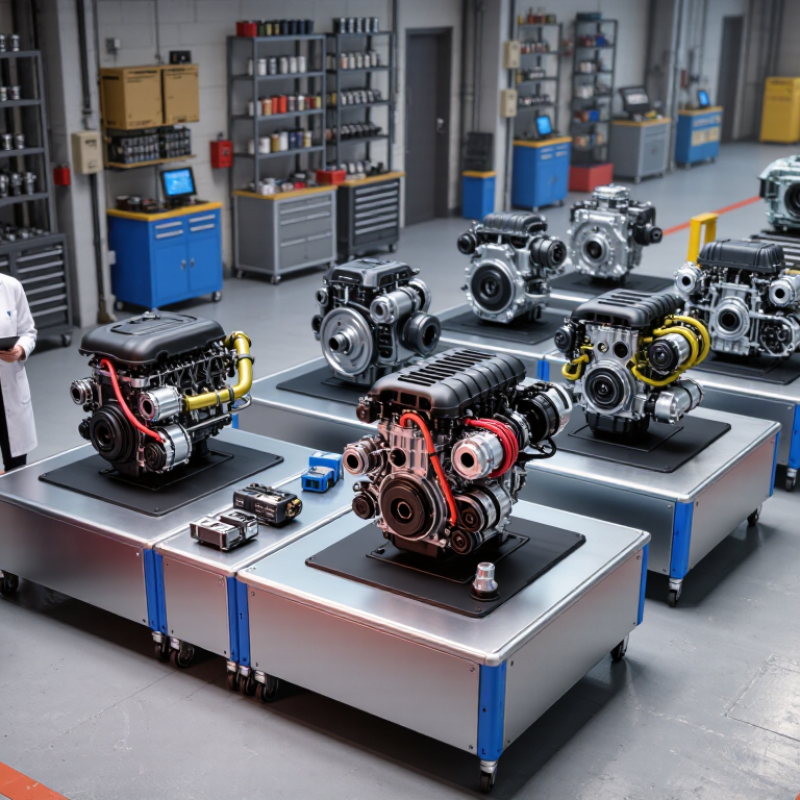
Choosing combustion motors for global sourcing begins with defining the motor type and its working environment. Gasoline engines suit light vehicles, portable equipment, and applications needing quick acceleration. Diesel engines provide stronger low-speed torque for trucks, generators, agricultural machines, and construction equipment. Their fuel efficiency is useful during long operating cycles. However, diesel systems may require heavier components and stricter emissions controls.
Other designs serve narrower purposes. Rotary combustion motors offer compact packaging and smooth operation, but sealing durability can become a concern. Small two-stroke engines remain practical for selected outdoor tools, although fuel efficiency and exhaust performance demand careful review. For each type, buyers should compare rated power, torque curve, cooling method, fuel quality tolerance, service intervals, and expected operating hours.
Local conditions can change the right decision. A generator in a hot, dusty region needs effective filtration and cooling capacity. A motor used at high altitude may produce less power without suitable calibration. Coastal applications require corrosion-resistant materials and protected electrical connections. During supplier audits, inspect test records, traceability documents, noise measurements, and spare-parts availability. A polished data sheet is not enough. Field performance may differ.
Global sourcing also requires checking destination-country emissions rules, fuel standards, safety requirements, and import documentation. Certification should match the actual configuration, not a similar model. One practical mistake is comparing purchase prices while ignoring maintenance access and downtime. A cheaper motor can become expensive when trained technicians or replacement parts are unavailable. Test samples under realistic loads before approving volume production.
| Combustion Motor Type | Ignition Method | Typical Fuels | Typical Efficiency Range | Typical Power and Duty Profile | Key Advantages | Main Limitations | Global Applications | Important Sourcing Criteria |
|---|---|---|---|---|---|---|---|---|
| Gasoline Spark-Ignition Engine | Spark plug ignites a premixed air-fuel charge. | Gasoline, ethanol-gasoline blends, and in some markets compressed natural gas. | Approximately 20%–35% brake thermal efficiency, depending on size, load, and technology. | Light to medium duty; commonly used from small portable engines to passenger-vehicle power levels. | Low-to-moderate initial cost, high power-to-weight ratio, smooth operation, and easy cold starting. | Generally higher fuel consumption than comparable diesel engines under heavy-duty operation; gasoline storage and emissions requirements vary by region. | Passenger vehicles Portable generators Lawn and garden equipment Small pumps Motorcycles | Fuel quality tolerance, emission certification, altitude performance, cooling system, spare-parts availability, and operating-hour rating. |
| Diesel Compression-Ignition Engine | High compression raises air temperature; injected fuel ignites without a spark plug. | Diesel fuel, biodiesel blends, renewable diesel, and selected synthetic diesel fuels. | Approximately 30%–45% for many modern engines; large slow-speed engines can be higher. | Medium to very heavy duty; well suited to continuous or high-load operation. | High low-speed torque, strong fuel economy, long service life, and good performance in demanding environments. | Higher purchase weight and cost, combustion noise, complex after-treatment on newer engines, and sensitivity to fuel contamination. | Heavy trucks Agricultural machinery Construction equipment Industrial generators Marine propulsion | Required emission stage, after-treatment system, fuel-injection quality, filtration, maintenance network, cold-start capability, and continuous-duty rating. |
| Liquefied Petroleum Gas Engine | Usually spark ignition, using a gaseous fuel metered into the intake system or injected directly. | Propane, butane, or propane-butane mixtures stored as a liquid under pressure. | Approximately 20%–30%, depending on engine design and load. | Light to medium duty; suitable for stationary equipment and selected commercial vehicles. | Lower particulate emissions than conventional diesel in many applications, clean combustion, and useful fuel storage density compared with compressed gas. | Fuel tanks require pressure-rated equipment; fuel availability differs by country; volumetric energy density is lower than gasoline. | Forklifts Warehouse equipment Backup generators Taxis and fleet vehicles Irrigation pumps | Local LPG composition, tank certification, vaporizer performance, refueling infrastructure, ventilation requirements, and hazardous-area compliance. |
| Compressed Natural Gas Engine | Usually spark ignition; some heavy-duty designs use high-pressure direct injection or dual-fuel operation. | Compressed natural gas, primarily methane; biomethane can be used when fuel specifications are compatible. | Approximately 25%–40%, depending on compression ratio, load, and engine configuration. | Light to heavy duty; especially practical for vehicles or equipment operating near a centralized refueling network. | Potentially lower well-to-wheel emissions when methane leakage is controlled; low sulfur and low particulate output at the tailpipe. | Bulky high-pressure storage tanks, limited refueling coverage in some regions, and methane leakage concerns across the fuel supply chain. | Urban buses Refuse vehicles Fleet trucks Distributed power Pipeline-connected equipment | Gas composition, storage pressure, cylinder certification, filling-standard compatibility, methane-slip control, and regional gas infrastructure. |
| Dual-Fuel Diesel-Gas Engine | A small diesel pilot injection initiates combustion of a gaseous fuel-air mixture. | Diesel with natural gas, biomethane, or selected low-carbon gaseous fuels. | Approximately 30%–45%, depending on the base engine and gas substitution rate. | Medium to heavy duty; effective where high engine utilization and gaseous-fuel access are available. | Can reduce liquid-fuel consumption while retaining diesel-like torque and load response. | More complex controls and fuel systems; gas availability is essential; performance may revert toward diesel-only operation when gas is unavailable. | Mining equipment Marine engines Power generators Heavy transport Oil and gas equipment | Gas substitution ratio, transient-load response, control-system integration, safety shutoff systems, pilot-fuel requirements, and service expertise. |
| Biofuel-Compatible Compression-Ignition Engine | Compression ignition, with fuel injection calibrated for biodiesel or renewable diesel specifications. | Biodiesel blends such as B5 or B20, higher biodiesel blends where approved, and hydrotreated renewable diesel. | Approximately 30%–45%; fuel consumption varies with fuel density and heating value. | Medium to heavy duty; suitable for existing diesel platforms when the fuel and engine approval are aligned. | Can reduce lifecycle greenhouse-gas emissions compared with fossil diesel, while using familiar diesel-engine architecture. | Feedstock sustainability varies; biodiesel can affect storage stability, cold-flow behavior, seals, filters, and warranty conditions. | Agricultural machinery Fleet vehicles Construction equipment Generators Marine auxiliary engines | Fuel standard, blend limit, oxidation stability, cold-filter plugging point, storage duration, elastomer compatibility, and manufacturer approval. |
| Hydrogen Internal-Combustion Engine | Typically spark ignition or direct injection; hydrogen is burned inside the cylinder rather than converted electrochemically. | Compressed hydrogen; fuel quality and pressure depend on the injection and storage system. | Approximately 25%–40% in current development and commercial-duty configurations. | Medium to heavy duty; most attractive for high-utilization equipment where rapid refueling and familiar engine architecture are valuable. | Zero carbon dioxide at the point of combustion when hydrogen contains no carbon; familiar mechanical architecture and fast refueling potential. | Hydrogen storage is bulky and high-pressure; possible nitrogen-oxide formation requires control; fueling infrastructure remains limited in many regions. | Heavy-duty vehicles Off-road machinery Backup power Stationary generation Specialized transport | Hydrogen production pathway, storage pressure, leakage control, injector durability, nitrogen-oxide after-treatment, safety certification, and local fueling access. |
| Two-Stroke Internal-Combustion Engine | Can use spark ignition or compression ignition; completes a power cycle in two piston strokes. | Gasoline, diesel, natural gas, or other fuels depending on engine design. | Approximately 15%–50%, with a wide range caused by major differences between small engines and large marine engines. | From very small portable equipment to very large, slow-speed continuous-duty propulsion systems. | High power-to-weight ratio in small engines; high thermal efficiency and strong low-speed torque in large marine versions. | Small designs can have higher emissions and fuel loss; lubrication, scavenging, noise, and regulatory compliance require careful design. | Small portable equipment Outboard propulsion Large marine vessels Specialized machinery | Application-specific emission rules, lubrication method, scavenging design, duty cycle, overhaul interval, vibration control, and parts availability. |
Measure starting current, working load, duty cycle, and operating hours. Choose enough margin without buying an oversized motor. Peak ratings can waste fuel during ordinary work.
Test fuel use at normal, low, and peak loads. Include warm-up, standby, and idle periods. Maximum-output data can mislead daily cost estimates.
Confirm fuel quality requirements before ordering. Request test results for high altitude, extreme heat, cold starts, and dusty environments. Inspect filtration needs carefully. Do not guess.
Ask for audit results, process records, calibration evidence, traceability, and delivery history. Request inspection, balancing, vibration, endurance, and cold-start reports. Brochures are not enough.
Use identical test conditions for fuel consumption, torque, oil use, noise, emissions, and failures. Check temperature, load, operating hours, and measuring equipment. Real samples may disagree with dashboards.
Include freight, insurance, duties, inland delivery, testing, installation, financing, maintenance, parts, downtime, and disposal. Calculate ownership over five to ten years. Small omissions become expensive.
Review emissions requirements, fuel quality, warranty limits, currency changes, delivery delays, and supplier concentration. Consider future demand and resale value. Some assumptions will still be wrong.
Confirm parts availability, diagnostic access, technician training, and remote support. Set response times in writing. Keep critical parts near remote sites. I once underestimated installation labor, and the final cost changed.
Choosing Combustion Motors for global sourcing requires a structured evaluation of technical, commercial, and regulatory factors. First, identify the appropriate motor type and its intended application, such as transportation, agriculture, construction, backup power, or industrial equipment. Then compare required power output, fuel compatibility, operating environment, emissions performance, fuel efficiency, durability, and maintenance needs. These factors should match both the equipment’s workload and the conditions of the target market.
A reliable sourcing decision also depends on carefully assessing suppliers, manufacturing capabilities, quality control systems, testing procedures, and applicable production standards. Buyers should verify certifications, import requirements, documentation, warranty terms, shipping arrangements, lead times, and after-sales support before placing an order. Finally, calculate the total cost of ownership, including purchase price, transportation, taxes, fuel consumption, maintenance, spare parts, downtime, and potential compliance risks. Selecting the best option means balancing performance, safety, lifecycle cost, supply stability, and long-term value rather than focusing only on the initial price.

 Nazhihui