Choosing the China best All Engine Parts supplier for global buyers requires more than comparing prices. A dependable supplier must prove quality, production experience, technical knowledge, and stable export performance. Engine parts are not ordinary components. A small dimensional error can affect compression, oil circulation, cooling, or long-term engine reliability.
W. Edwards Deming, a respected manufacturing quality expert, stated, “Quality comes not from inspection, but from the improvement of the production process.” This principle remains valuable when evaluating an All Engine Parts manufacturer. Buyers should examine machining equipment, material certificates, quality-control records, sample consistency, packaging, and communication procedures. Factory visits, third-party inspections, and trial orders can reveal details that brochures often hide. Ask practical questions. What happens when a batch fails testing? How are replacement parts handled? Can the supplier support different engine models without confusing specifications?
China offers a broad manufacturing network, but not every factory provides the same reliability. Some suppliers have strong tooling and weak documentation. Others respond quickly but lack stable production capacity. That matters. A lower quotation may become expensive after delays, incorrect parts, or repeated inspections. The evaluation process should therefore balance price, precision, traceability, warranty support, and delivery performance.
No supplier is perfect. Buyers should remain cautious, even after a successful first order. The strongest partnership develops through verified data, clear technical drawings, and honest feedback. This guide examines how global buyers can identify a capable China All Engine Parts supplier and make a decision based on evidence, not impressive claims alone.
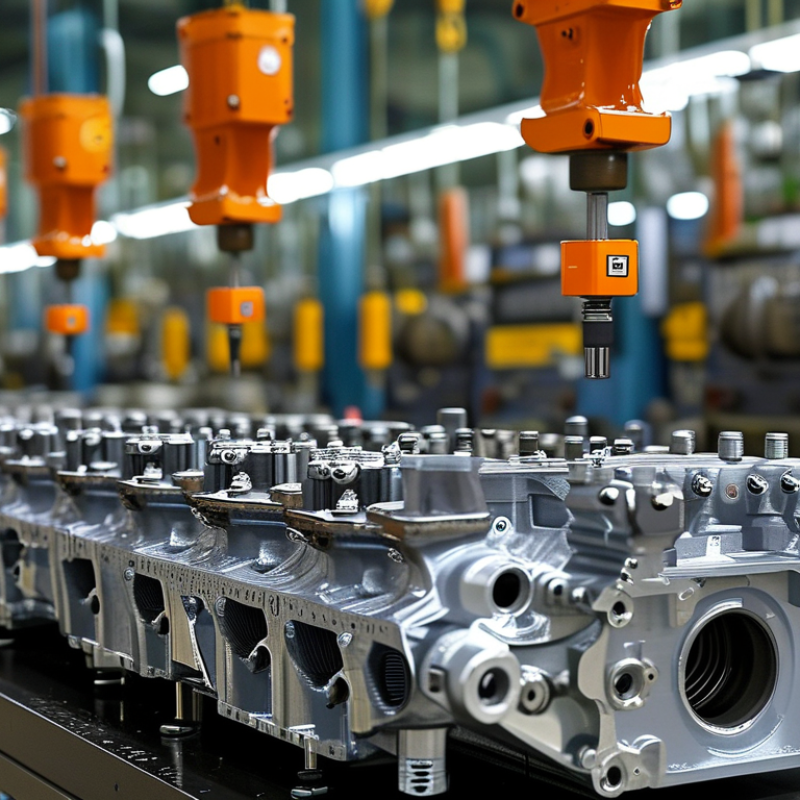
China Best All Engine Parts Supplier for Global Buyers?
China’s 30.16 Million Vehicles Produced in 2023: Supplier Scale (CAAM)
China produced 30.16 million vehicles in 2023, according to the China Association of Automobile Manufacturers (CAAM). Vehicle sales reached approximately 30.09 million units during the same year. This scale creates a deep manufacturing base for engine components, including pistons, gaskets, bearings, filters, timing parts, and cooling-system assemblies.
The number matters because large production ecosystems support specialized tooling, testing facilities, and stable material supply. CAAM’s figures also show why international buyers often compare Chinese suppliers by production capability, not price alone. The International Organization of Motor Vehicle Manufacturers reported global vehicle production above 93 million units in 2023. China therefore represented nearly one-third of worldwide output.
Scale is useful.
However, vehicle output does not automatically prove consistent aftermarket quality. Buyers should review material certificates, dimensional inspection records, batch traceability, and endurance-test results. ISO-based quality systems can support reliability, but paperwork alone is not enough. In practical sourcing, sample approval should match the final production process.
The International Energy Agency reported rapid growth in global electric-car sales in 2023. This shift may reduce demand for some traditional engine parts over time. Yet hybrid vehicles, commercial fleets, and older combustion vehicles still require replacement components. A careful supplier assessment should examine both current engine-part expertise and future manufacturing flexibility. Mistakes happen, especially when specifications are translated poorly. Clear drawings and measured samples remain essential.
Global buyers need one dependable source across changing powertrain categories. OICA recorded about 93.5 million motor vehicles produced worldwide in 2023. That scale supports steady demand for reliable engine components, including pistons, valves, gaskets, filters, and fuel-system parts.
Four-stroke engines require accurate timing, compression, and lubrication. A small valve-clearance error can reduce performance quickly. Diesel applications demand stronger injectors, glow plugs, turbocharger parts, and high-temperature sealing materials. Gasoline engines often need precise ignition components, fuel pumps, sensors, and lightweight piston assemblies. Each category requires separate testing procedures. Treating them as interchangeable is a costly mistake.
New-energy compatibility changes the sourcing checklist. The International Energy Agency reported more than 14 million electric cars were sold globally in 2023. Electric drivetrains use fewer traditional engine parts, but they still need thermal-management components, reduction-gear parts, sensors, seals, and cooling pumps. Hybrid vehicles may combine gasoline-engine parts with high-voltage systems. That mixed structure complicates inspection. I have seen buyers focus on unit price, then discover connector differences during installation.
Tips: Request drawings, material specifications, tolerance data, and sample testing before bulk orders. Confirm whether parts fit four-stroke, diesel, gasoline, hybrid, or electric applications. Ask for batch traceability and inspection records. Independent testing adds time, but it can prevent expensive field failures. No supplier should promise universal compatibility without verified application data.
China Best All Engine Parts Supplier for Global Buyers?
IATF 16949 Quality Systems and ISO 9001 Compliance for Global Buyers
For global buyers, quality begins before an engine part reaches the inspection table. A reliable Chinese supplier should connect IATF 16949 controls with ISO 9001 process discipline. The 2022 ISO Survey recorded 1,265,216 ISO 9001 certificates across 189 countries and economies. That scale shows the standard’s global relevance, but certification alone proves little.
Look for measurable evidence. Ask for process flow charts, control plans, calibration records, and material traceability. On a production line, each crankshaft, gasket, or valve component should link to a batch record and inspection result. IATF 16949 also strengthens automotive risk control through customer-specific requirements, failure analysis, and corrective action. PPAP documentation should be complete, readable, and matched to the approved drawing.
A strong supplier welcomes remote audits and evidence-based questions. It should show how operators handle nonconforming parts, not merely display a certificate. Our process is not flawless. That admission matters. Corrective actions must identify root causes, owners, deadlines, and verification results. Buyers should review defect trends, delivery performance, and audit findings over several months. A single successful shipment is not enough. Supplier quality is demonstrated repeatedly, under pressure, with records that another auditor can verify.
| Evaluation Dimension | Global Buyer Expectation | Relevant Standard or Practice | Evidence to Request | Priority |
|---|---|---|---|---|
| Quality Management System | A documented and consistently implemented system covering purchasing, production, inspection, corrective action, and continual improvement. | ISO 9001:2015 Quality Management System | Valid certificate, certification scope, issuing certification body, audit status, and certificate verification record. | Critical |
| Automotive Quality System | Automotive-specific risk controls, defect prevention, product safety management, and customer-specific requirement handling. | IATF 16949:2016, where applicable to the supplier’s certified scope | IATF certificate, site address, covered manufacturing activities, expiry date, and latest audit status. | Critical |
| Part Identification and Traceability | The supplier should be able to link finished parts to production lots, raw materials, inspection results, and shipment records. | IATF 16949 traceability requirements and customer-specific requirements | Sample lot code, traveler or route card, material certificate, inspection report, and recall or containment procedure. | Critical |
| Incoming Material Control | Materials and outsourced processes should be approved, inspected according to risk, and controlled against defined specifications. | ISO 9001 supplier control; IATF 16949 externally provided processes | Approved supplier list, incoming inspection plan, material certificates, supplier evaluation records, and nonconformance records. | High |
| Dimensional and Functional Inspection | Inspection methods should match the component’s critical characteristics, operating conditions, and customer drawings. | Control plan, work instructions, drawing requirements, and measurement system analysis | Inspection report, calibrated equipment list, gauge records, functional test results, and measurement system studies when required. | Critical |
| Process Capability and Statistical Control | Critical dimensions should be monitored using appropriate process controls, statistical methods, and reaction plans. | IATF 16949 core tools and customer-specific requirements | Process flow, PFMEA, control plan, SPC charts, capability studies, and documented out-of-control reaction procedures. | High |
| Production Part Approval | Pre-production samples should demonstrate conformity before regular production or engineering changes are released. | PPAP or equivalent customer-specific approval process | Dimensional results, material and performance test records, process documentation, sample parts, and signed customer approval where required. | Critical |
| Nonconformance and Corrective Action | Defects should be contained quickly, investigated using a structured method, and closed only after effectiveness is verified. | 8D, root-cause analysis, corrective action, and preventive control | Redacted 8D reports, containment records, root-cause evidence, corrective-action owners, due dates, and effectiveness checks. | High |
| Calibration and Measurement Control | Measurement equipment should be identified, calibrated or verified at planned intervals, and protected from damage or unauthorized adjustment. | ISO 9001 monitoring and measuring resources requirements | Calibration certificates traceable to recognized standards, equipment status labels, due-date records, and out-of-tolerance assessments. | High |
| Change and Configuration Management | Changes to drawings, materials, tooling, processes, or sub-suppliers should be reviewed, approved, validated, and traceable. | ISO 9001 change planning; IATF 16949 manufacturing change controls | Engineering change request, risk assessment, validation results, customer notification, approval record, and revised controlled documents. | Critical |
| Packaging and Export Readiness | Packaging should protect parts from corrosion, impact, contamination, and mix-ups during international transportation and storage. | Customer packaging specification and applicable export requirements | Packaging specification, pallet or carton markings, preservation method, packing list, inspection photos, and shipping documentation sample. | Medium |
| Supplier Performance Monitoring | Performance should be reviewed using objective indicators such as quality, delivery, responsiveness, and corrective-action closure. | ISO 9001 performance evaluation and IATF 16949 supplier monitoring | Anonymized monthly scorecards, customer complaint trends, on-time delivery records, return data, and improvement plans. | High |
| Technical and After-Sales Support | The supplier should provide clear technical communication, application support, replacement procedures, and documented handling of field issues. | Contractual requirements, warranty process, and customer communication controls | Technical datasheets, installation guidance, warranty terms, response workflow, escalation contacts, and anonymized service-case records. | Medium |
China’s engine-parts supply network supports global buyers across OEM and aftermarket channels. With 4.91 million vehicle exports, accurate parts matching has become essential. OEM parts follow original specifications, while aftermarket parts may offer wider pricing and availability. However, lower cost cannot replace verified fitment.
Experienced suppliers should provide drawings, material data, inspection reports, and batch traceability. Ask for dimensions, engine codes, applicable vehicle years, and packaging photos. Export standards also differ by destination. A component accepted in one market may need different labeling, documentation, or testing elsewhere. Small errors can delay a container.
Tips: Compare samples before bulk orders. Check seals, threads, surface finish, and hardness. Request a clear warranty process. Keep written records of tolerances and inspection results. A perfect catalog can still hide a matching problem. This is where careful communication matters.
Reliable sourcing is not only about finding an engine part. It requires checking production consistency, protective packaging, and delivery readiness. Suppliers with in-house quality control can respond faster when measurements fail. Independent inspection adds confidence, especially for large shipments. Yet inspection is not magic; unclear specifications still create risk. Buyers should review technical files with mechanics or engineers familiar with the target vehicle market. That practical step often prevents expensive returns.
China’s vehicle exports increased from approximately 1.02 million units in 2019 to 4.91 million units in 2023. This expansion indicates a broader and increasingly diverse demand base for OEM and aftermarket engine parts among global vehicle buyers.
Source: China Association of Automobile Manufacturers (CAAM) annual vehicle export statistics. Values are rounded to million units.
China Best All Engine Parts Supplier for Global Buyers?
Supplier Verification: Traceability, Testing, Warranty, and Total-Cost Metrics
When comparing engine-parts suppliers in China, verification should begin with traceability, not attractive catalog photos. Ask for batch numbers, material records, inspection dates, and the production line responsible. A reliable supplier should connect each part to a documented process. Check whether those records remain available after shipment. Records can be incomplete.
Testing must match real operating conditions. Request dimensional reports, hardness results, pressure tests, and balance data where relevant. For a pump, ask about flow at defined temperatures. For a gasket, review compression and leakage testing. Independent laboratory checks can expose gaps, but they should support factory controls. Certificates need context.
Warranty terms need measurable language. Confirm coverage periods, evidence requirements, response times, and replacement procedures. Ask how previous claims were resolved. The cheapest invoice may hide freight, downtime, inspection, rework, and emergency sourcing costs. Build a landed-cost sheet before choosing a supplier. Include minimum order quantities, tooling, packaging, taxes, and expected failure rates. Score communication speed and document accuracy. They often predict future friction. Verify the batch. Keep samples. An uncomfortable lesson is that polished audits can still miss weak process discipline. Recheck random samples, and review results with an engineer, not only a buyer. Small doubts deserve written answers.
China produced 30.16 million vehicles in 2023. This supports specialized tooling, testing facilities, and broad material supply. Scale helps, but it does not guarantee consistent quality.
Common parts include pistons, gaskets, bearings, filters, timing components, and cooling assemblies. Buyers should confirm dimensions, materials, and engine compatibility before ordering.
No certificate proves everything. Request process charts, calibration records, material certificates, and batch-traceability documents. A factory should also explain how it handles defective parts.
Ask for inspection reports, approved drawings, control plans, and endurance-test results. Review dimensional results for items such as crankshafts, valves, and gaskets. Paperwork can still be incomplete.
Send clear drawings, measured samples, engine codes, and applicable vehicle years. Check seals, threads, surface finish, hardness, and critical tolerances. Translation mistakes happen.
Original-specification parts follow defined vehicle requirements. Aftermarket parts may provide broader availability and different pricing. Lower cost cannot replace verified fitment.
Destination markets may require different labels, documents, packaging, or testing. A small marking error can delay a container. Confirm requirements before production begins.
Review defect trends, delivery records, audit findings, and corrective actions over several months. Check whether sample quality matches mass production. One good shipment is not enough.
China’s production of 30.16 million vehicles in 2023 demonstrates the country’s broad manufacturing capacity and extensive supply base for global buyers. This scale supports sourcing across major engine-part categories, including 4-stroke, diesel, gasoline, and components compatible with new-energy vehicle systems. For international purchasers, the best All Engine Parts supplier should offer consistent product quality, technical expertise, and the ability to match parts with different vehicle applications and operating conditions.
Reliable supplier selection also depends on documented quality systems, such as IATF 16949 and ISO 9001 compliance, as well as clear standards for OEM, aftermarket, and export products. With 4.91 million vehicles exported in 2023, suppliers must be prepared to meet diverse international requirements. Buyers should evaluate traceability, inspection and testing procedures, warranty terms, delivery reliability, and total cost—not just unit price—before establishing a long-term partnership.

Nazhihui