Choosing among the 10 Best Wheel Hub Reducer Suppliers for Global Buyers requires more than comparing catalog prices. A reducer may look compact on a specification sheet, yet fail under repeated shock loads, mud, heat, or uneven terrain. Buyers should examine rated torque, reduction ratio, backlash, sealing quality, bearing design, lubrication requirements, and verified service life.
Mechanical engineering author Robert L. Norton emphasizes a practical rule: “Design begins with understanding the load.” That principle fits every Wheel Hub Reducer purchase. A supplier should explain how its unit performs during acceleration, braking, slope climbing, and continuous low-speed operation. Test data matters. So does traceability.
Look closely.
This guide evaluates suppliers through an international buyer’s lens. It considers manufacturing experience, customization capability, quality systems, delivery reliability, technical communication, and after-sales support. Strong suppliers can provide drawings, load calculations, inspection records, and clear installation guidance. They should also discuss limitations instead of promising universal performance.
No ranking is perfect. Application data varies widely, and supplier information may change. Some manufacturers publish impressive efficiency figures without showing test conditions. That deserves caution. Buyers should request samples, reference projects, and independent verification before approving large orders. A dependable Wheel Hub Reducer supplier is not simply the cheapest option. It is the partner that delivers consistent torque, controlled heat, durable seals, and practical support across the product’s working life.
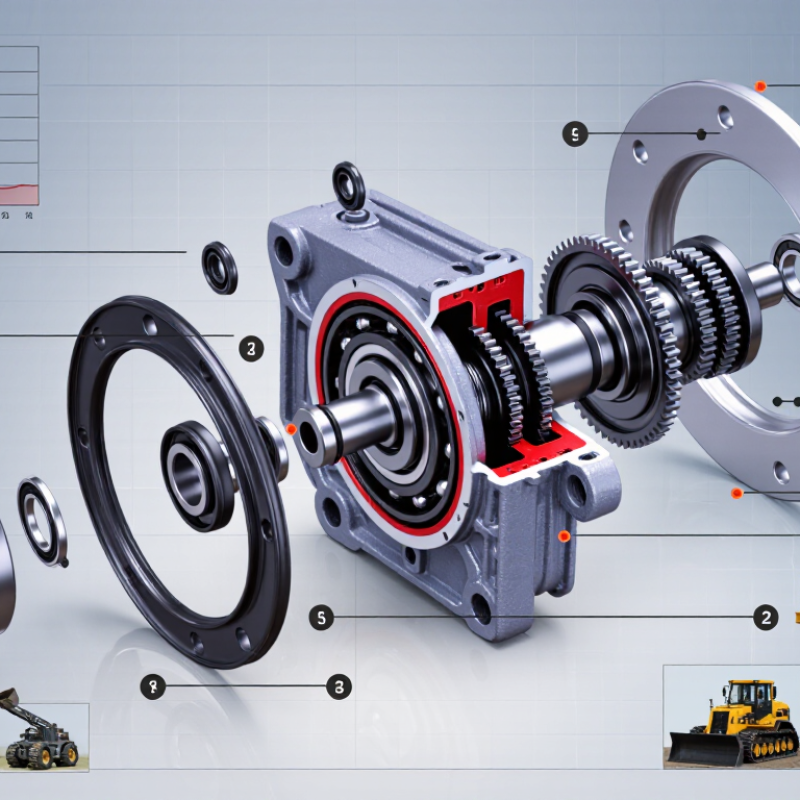
Understanding Wheel Hub Reducers and Their Industrial Applications
Understanding Wheel Hub Reducers and Their Industrial Applications
Wheel hub reducers combine gearing, bearings, and housing protection near the wheel. They reduce motor speed while increasing usable torque. This design supports compact machines with limited installation space. Planetary stages are common because they distribute loads across several gears. The result is efficient power transmission and improved stability under changing loads.
These reducers serve automated guided vehicles, electric carts, conveyors, agricultural machines, and mobile platforms. They also support lifting systems that need controlled movement and reliable braking. In dusty factories, sealing quality matters as much as gear strength. In outdoor equipment, corrosion resistance and thermal performance deserve close inspection. A catalog torque value may look impressive, but duty cycles can expose weaknesses. Buyers should request load calculations, noise data, backlash limits, and endurance-test records. Independent verification is preferable when the application carries heavy or valuable equipment. Some selection decisions remain imperfect because real operating conditions rarely match laboratory tests.
Tips:
Check peak torque, continuous torque, wheel speed, mounting dimensions, and service temperature. Ask about lubricant type and replacement intervals. Confirm that the reducer fits the motor and brake system. Review installation instructions carefully. Small alignment errors can create vibration, heat, and premature wear. A supplier with traceable testing, responsive engineering support, and clear warranty terms is usually more dependable than a low-price source.
Key Criteria for Evaluating Global Wheel Hub Reducer Suppliers
Key Criteria for Evaluating Global Wheel Hub Reducer Suppliers
Selecting a wheel hub reducer supplier requires more than comparing unit prices. The supplier must demonstrate torque capacity, reduction ratio stability, thermal performance, sealing quality, and service life under realistic loads. Ask for test records using your actual wheel speed, axle load, duty cycle, and ambient temperature. A laboratory result at 25°C may not represent a dusty mine or a wet construction site.
Demand traceable quality systems and repeatable production controls. ISO 9001 certification supports process discipline, but it does not replace product evidence. Review material certificates, gear hardness results, dimensional reports, fatigue testing, and end-of-line inspection data. The IEA Global EV Outlook 2024 reported nearly 14 million electric car sales in 2023. This growth increases demand for efficient, compact driveline components. Efficiency matters. Yet suppliers should disclose measured losses, not only advertise “high efficiency.”
Global delivery capability also deserves careful testing. The World Bank’s Logistics Performance Index 2023 identifies reliability and shipment tracking as major logistics factors. Request realistic lead times, safety-stock policies, export documentation, and regional technical support. Evaluate warranty response with a sample failure scenario. How quickly can the supplier identify root cause and provide replacement parts?
Do not trust polished presentations alone. A low quotation can hide weak seals, unstable heat treatment, or expensive field repairs. I would also challenge my own evaluation: one successful prototype proves little. Audit production capacity, inspect incoming materials, and compare at least three verified test batches before approval. Supplier transparency is often more valuable than a perfect sales promise.
Profiles of the Ten Leading Wheel Hub Reducer Manufacturers
The ten leading wheel hub reducer manufacturers serve different operating needs. One focuses on compact planetary units for electric utility vehicles. Another builds high-torque reducers for agricultural machinery working in muddy fields. A third specializes in sealed assemblies for construction equipment exposed to dust and water. Its testing records often include leakage checks and thermal cycling.
A fourth supplier develops lightweight aluminum housings for mobile platforms. A fifth concentrates on low-noise reducers for automated warehouses. A sixth offers custom gear ratios for tracked carriers and heavy-duty carts. A seventh is known for hardened steel gears and extended service intervals. An eighth supports small-batch production, which helps buyers test new vehicle designs. A ninth combines motors, brakes, and reducers in one wheel-end module. The tenth manufacturer emphasizes global spare-parts support and clear installation documents.
Experienced buyers should inspect more than rated torque. Shaft alignment, bearing preload, lubricant selection, and brake compatibility affect real performance. Ask for load-cycle data, dimensional drawings, material certificates, and sample inspection reports. A supplier may quote impressive efficiency, yet actual results can change with tire size and operating temperature. That is a detail worth challenging. Factory audits and pilot testing also reveal practical weaknesses, including slow communication or inconsistent sealing. No manufacturer is perfect. Reliable sourcing comes from comparing evidence, not polished product descriptions.
Comparing Product Quality, Customization, Pricing, and Support
10 Best Wheel Hub Reducer Suppliers for Global Buyers
Choosing among ten wheel hub reducer suppliers requires more than comparing catalog prices. The ISO Survey 2022 recorded 1,265,216 valid ISO 9001 certificates worldwide. Certification helps, but it does not prove reliable reducer performance. Ask for gear material records, heat-treatment results, backlash data, sealing tests, and endurance reports. A supplier should explain test conditions clearly. Vague claims are warning signs.
Customization should match the vehicle’s working environment. Request load curves, wheel torque, reduction ratio, mounting dimensions, brake integration, and operating temperature limits. IEA’s Energy Efficiency 2023 report states that industry uses about 37% of global final energy. Therefore, reducer efficiency can affect operating costs, especially in continuously used equipment. However, efficiency figures need real test data. Simulation alone is insufficient.
Pricing must include tooling, samples, inspection, packaging, freight, duties, and spare parts. Compare landed cost at several volumes, not only the first quotation. Support also matters. Check response times, drawing revision control, warranty terms, and replacement-part availability. A practical supplier should provide a failure-analysis process. Small details matter. My own evaluation would score quality at 35%, customization at 25%, pricing at 20%, and support at 20%. That weighting is imperfect, but transparent scoring reduces emotional decisions. A low-cost reducer can become expensive after one seal failure.
Guidelines for Selecting the Right Supplier for Your Market
10 Best Wheel Hub Reducer Suppliers for Global Buyers
Choosing a wheel hub reducer supplier requires more than comparing prices. Buyers should match torque, reduction ratio, duty cycle, and installation space with real operating conditions. A warehouse vehicle may face dust, ramps, and repeated starts. An outdoor platform needs stronger sealing and corrosion protection. The International Energy Agency reported that global electric car sales exceeded 14 million in 2023. This growth increases demand for compact, efficient drivetrain components.
Supplier evaluation should include test evidence, not only product brochures. Request efficiency curves, noise data, thermal results, backlash limits, and endurance records. Check whether the supplier can provide batch traceability and clear warranty terms. ISO’s 2023 survey recorded more than one million ISO 9001 certificates worldwide, but certification alone does not prove engineering ability. Ask for sample inspection reports and independent test details. Small details matter.
Local support can reduce costly delays. Compare spare-parts availability, response times, customs experience, and technical language. The World Bank’s 2023 Logistics Performance Index shows major differences in global shipment reliability. A supplier with excellent machinery may still perform poorly in your market. Review pilot units before signing a large contract. A spreadsheet can look perfect. It cannot reveal every vibration, temperature rise, or assembly problem. My own assessment would leave room for revision, because field conditions often challenge laboratory assumptions.
FAQS
Compare torque capacity, reduction ratio stability, heat performance, sealing quality, and expected service life.
Request tests matching wheel speed, axle load, duty cycle, and ambient temperature. A laboratory result at 25°C may not reflect dusty or wet worksites.
Ask for material certificates, gear hardness results, dimensional reports, fatigue tests, and final inspection records. Certification helps, but evidence matters more.
Request measured power losses at different loads, speeds, tire sizes, and temperatures. Marketing language is not enough.
Request realistic lead times, shipment tracking, export documents, safety-stock policies, and regional technical support. Promises can change.
Present a sample failure scenario and ask how quickly the supplier finds the cause and supplies replacement parts. Response speed matters.
Check shaft alignment, bearing preload, lubricant selection, brake compatibility, and installation dimensions. Small errors matter.
No. Compare at least three verified test batches and audit production capacity. One prototype proves little.
They may expose inconsistent sealing, weak material control, slow communication, or unstable production quality. Perfection is unlikely.
Include field repairs, spare parts, downtime, testing, and warranty response in the total cost. A cheap reducer may become expensive.
Conclusion
This guide presents a practical overview of the Wheel Hub Reducer, explaining how its compact design, torque multiplication, and reliable power transmission support applications in construction equipment, agricultural machinery, material-handling systems, mining vehicles, and specialized transport platforms. It also outlines the main factors global buyers should consider when evaluating suppliers, including manufacturing consistency, material quality, load capacity, sealing performance, testing procedures, production flexibility, certifications, delivery capability, and after-sales service.
The article profiles ten leading types of manufacturers without focusing on brand names, helping readers compare suppliers according to product quality, customization options, pricing structures, lead times, warranty policies, technical assistance, and communication efficiency. It concludes with a clear selection framework for matching a supplier’s engineering expertise, production scale, regional support, and long-term reliability with the specific requirements of each market. By applying these criteria, buyers can reduce procurement risks and choose a Wheel Hub Reducer supplier that offers dependable performance and sustainable value.

 Nazhihui