10 Air Compressor Buying Tips for Global Buyers

Time:2026-11-07 Author:Amelia
0%

Buying an Air Compressor for an international operation involves more than comparing horsepower or purchase prices. The right model depends on the application, duty cycle, required airflow, operating pressure, and available power. A workshop using one impact wrench has different needs from a packaging line running through every shift. These distinctions may seem obvious, yet they are easy to overlook when reviewing quotations from different suppliers.

A useful buying decision starts with real operating conditions. Check the tools’ air demand, expected run time, voltage and frequency, ambient temperature, and air-quality requirements. Confirm that the quoted airflow and pressure match the manufacturer’s specifications, not just a headline figure. Ask about noise levels, maintenance intervals, spare parts, warranty coverage, and service support near the installation site. Details matter.

There is no single compressor that suits every facility. A lower purchase price may bring higher energy use, inconvenient servicing, or capacity that falls short during peak demand. On the other hand, buying far more capacity than needed can also add unnecessary expense. It depends. These ten Air Compressor buying tips help global buyers compare practical trade-offs, ask suppliers clearer questions, and reduce avoidable surprises. Still, specifications cannot replace a careful assessment of the actual site. That step is sometimes rushed—and it deserves a second look.
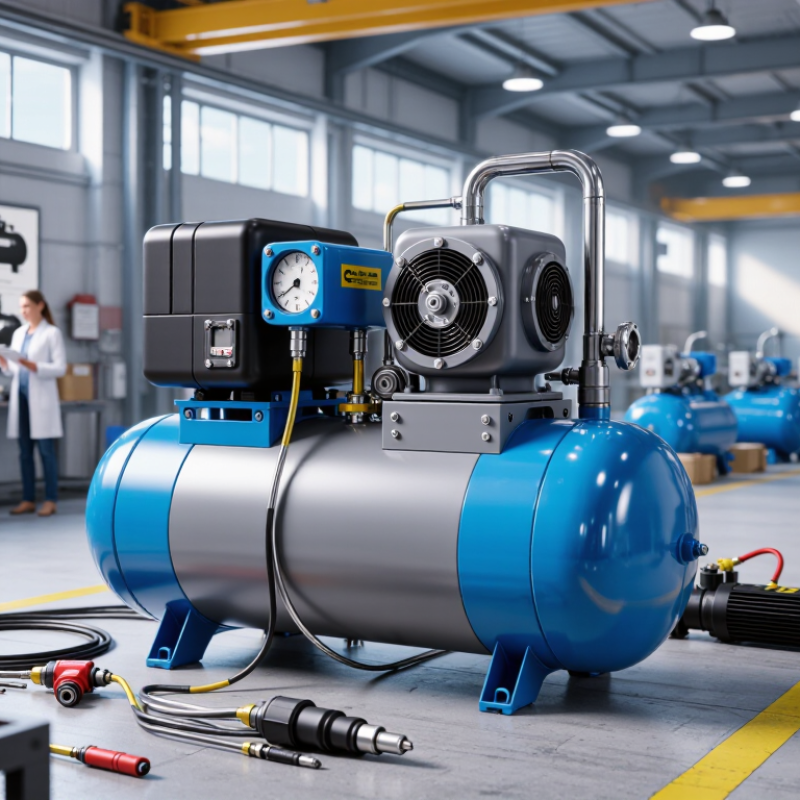
10 Air Compressor Buying Tips for Global Buyers

Define Your Air Demand, Workload, and Operating Conditions

Before comparing air compressors, map the air your operation actually uses. List each tool’s required pressure and flow, using reliable equipment data where available. A spray gun, impact wrench, and packaging line may draw air differently, even when their pressure ratings look similar. Note which tools operate together and estimate their actual running hours. Peak demand matters more than a daily average. Allow for brief surges, but do not add every tool’s maximum flow without checking whether they overlap. That can inflate your estimate.

Check the workload and site conditions too. A compressor running continuously needs a different duty rating from one used for short bursts. Measure pressure at the point of use, since long or narrow pipes can cause drops. Heat, dust, humidity, and poor ventilation also affect performance and maintenance needs. Small leaks matter. A loose fitting can waste air all day. I would review the estimate against real operating data after installation; the first calculation can miss an awkward shift pattern or an extra tool. Keep that uncertainty visible when choosing capacity.

Compare Compressor Types, Technologies, and Suitable Applications

A reciprocating compressor suits intermittent demand, such as a small workshop running pneumatic tools. It starts and stops often, so check its duty cycle before buying. Rotary screw models are better suited to steady production shifts and continuous air demand. For very large, stable flows, centrifugal units may be efficient, but they need careful sizing and specialist maintenance. Scroll compressors can serve quieter, smaller applications, including laboratories. Noise matters. So does the air quality required at the tool.

Technology affects energy use as much as compressor type. Fixed-speed machines can work well under steady loads; variable-speed models adjust output when demand changes. But a VSD is not automatically the cheaper choice. Compare actual demand profiles, operating hours, pressure requirements, and service access. The U.S. Department of Energy’s Improving Compressed Air System Performance sourcebook reports that leaks can waste 20–30% of compressor output. A new machine may not fix a poorly maintained distribution network. That detail is easy to overlook.

Match filtration and drying to the application: paint finishing and sensitive instruments usually need cleaner, drier air than general workshop tools. Ask suppliers for flow data at your required pressure, not only headline motor power. The Compressed Air and Gas Institute’s performance data sheets can help buyers compare tested compressor performance. Still, site conditions vary. Heat, altitude, and fluctuating demand can change results, so treat catalogue figures as a starting point, not a promise.

Air Compressor Buying Guide: Typical Operating Pressure by Type

Compare common pressure ranges to help match compressor technology to your application. Values are indicative; actual pressure depends on the model and configuration.

How to use this chart: Reciprocating, rotary screw, and scroll compressors commonly serve general-purpose systems around 7–10 bar. Rotary screw and multistage centrifugal systems can suit applications requiring higher pressure. Check the required pressure and airflow at the point of use before choosing.

Check Capacity, Pressure, Power, and Air Quality Specifications

Start with the tools’ real duty cycle, not the compressor’s largest advertised capacity. Record each tool’s required airflow and pressure, then calculate which tools will run simultaneously. Check pressure at the point of use, after losses through pipes, filters, and dryers. A tank can cover brief demand peaks, but it cannot fix a compressor that is consistently undersized. Too much capacity can also cause inefficient cycling. This calculation is rarely perfect; production schedules change.

Compare motor power in kilowatts with delivered airflow at your working pressure. The U.S. Department of Energy’s Improving Compressed Air System Performance sourcebook notes that compressed air can account for about 10% of electricity use in manufacturing facilities. It also warns that leaks in poorly maintained systems may waste 20–30% of compressor output. Ask suppliers for measured performance data, not only motor ratings. A lower purchase price may hide higher energy costs.

Air quality matters just as much. Specify the required particle, water, and oil classes under ISO 8573-1, based on the tools and process—not a vague “clean air” requirement. A paint line and a general workshop may need different treatment. Include dryers and filters in the system assessment, and check pressure drop as filters load with dirt. “Oil-free” alone does not define every aspect of air quality.

10 Air Compressor Buying Tips for Global Buyers - Check Capacity, Pressure, Power, and Air Quality Specifications

# Buying Tip Specification to Check Practical Example or Guidance Why It Matters
1 Match capacity to actual demand Free air delivery (FAD), usually stated in L/min or m³/min, at the specified operating pressure. If measured peak demand is 400 L/min, assess that figure together with a justified allowance for leakage, future growth, and demand variation. Treat any example allowance as site-specific. Nominal displacement is not the same as delivered FAD. Selecting by the wrong figure can result in insufficient air or unnecessary energy use.
2 Confirm pressure at the point of use Required working pressure in bar(g) or psi(g), plus pressure losses through pipes, filters, dryers, and regulators. If a tool requires 7 bar(g) and the system has an estimated 0.5 bar pressure drop, the supply must maintain the required pressure after those losses. Confirm the figures under peak flow. Pressure measured at the compressor may be higher than pressure available at the equipment.
3 Check electrical compatibility Motor input power (kW), voltage, phase, frequency (Hz), full-load current, and starting requirements. A 7.5 kW, 400 V, three-phase, 50 Hz motor is only an example. Verify the site supply, electrical code, protective devices, and starting method before ordering. Electrical standards and available supply differ between countries, and an incompatible motor can require costly changes.
4 Match the compressor to the duty cycle Operating hours, peak-demand duration, load/unload behavior, and suitability for continuous or intermittent operation. Record whether demand is steady throughout a shift or occurs in short bursts. Ask for performance data at the expected operating pressure and duty profile. A compressor that is poorly matched to demand may cycle excessively, run inefficiently, or fail to maintain system pressure.
5 Define the required air quality ISO 8573-1 purity class for particles, water, and total oil, specified in that order. For example, ISO 8573-1:2010 class notation [2:4:2] identifies separate classes for particles, water, and oil. Confirm the required class for each application and specify it at the point of use. Different processes require different air quality. A general-purpose specification may not be suitable for instruments, packaging, or product-contact applications.
6 Select the right dryer and dew point Pressure dew point (PDP), dryer capacity, inlet conditions, and expected ambient temperature. A refrigerated dryer commonly provides a PDP around +3°C under its rated conditions; adsorption dryers are used where much lower PDPs, such as -40°C, are required. Check the actual operating conditions and required class. Moisture can cause corrosion, product contamination, instrument problems, or freezing in cold lines.
7 Size the air receiver for the system Receiver volume in litres, pressure-control range, peak-flow duration, and compressor control strategy. Provide the demand pattern and allowable pressure drop to the supplier for receiver sizing. A receiver's volume alone does not state how much usable air it can supply at the required pressure. A correctly sized receiver can help manage short demand peaks and reduce rapid compressor cycling.
8 Evaluate noise and installation needs Sound level in dB(A), measurement distance and conditions, ventilation, service access, and room heat removal. Compare sound data using the same measurement method and distance. Confirm that the proposed room has adequate airflow and space for maintenance. Noise, heat, and restricted access can affect worker comfort, reliability, and maintenance costs.
9 Account for climate and site conditions Ambient temperature, altitude, humidity, dust, enclosure rating, and any manufacturer capacity derating. For a hot or high-altitude site, request rated performance at the actual site conditions rather than relying only on standard test conditions. Extreme heat, altitude, and contamination can reduce available output or increase cooling and filtration requirements.
10 Compare efficiency and lifetime cost Input power, delivered FAD at the required pressure, part-load performance, service intervals, and energy use. Compare specific power, expressed as kW per m³/min of FAD, only when pressure, test conditions, and measurement methods are comparable. Include expected operating hours and maintenance in the cost review. Purchase price is only one part of the cost; energy and servicing over the equipment's operating life can be significant.

Assess Supplier Reliability, Certifications, and International Support

A compressor may meet every stated specification and still become a poor purchase if its supplier cannot support it. Check how long the supplier has handled similar equipment and ask for references from buyers with comparable operating conditions. Request a factory test report for the exact model, not a generic sample. Ask how performance is measured, including pressure, airflow, and noise under stated test conditions. Ask for proof.

Review certificates carefully. Confirm that each document applies to the compressor model and destination market, and check its issuing body and validity. A certificate image alone is not enough. If details are unclear, ask the supplier to explain them in writing and verify them with the issuer where possible. Keep the replies with your purchasing records.

International support matters after delivery. Before ordering, confirm warranty coverage, local service options, spare-parts availability, and typical response times across time zones. Ask whether manuals and troubleshooting instructions are available in a language your technicians can use. A polished PDF is not proof of dependable service. I would also test the supplier’s responsiveness with a specific question, such as the lead time for a replacement filter. Slow or vague replies before payment may signal friction later, though one missed email is not a full assessment. Combine documents, references, and direct communication before making a decision.

Compare Total Ownership Costs, Delivery Terms, and Warranty Coverage

A low purchase price can hide expensive operating costs. Compare the compressor’s expected energy use, maintenance intervals, replacement parts, and required accessories. Ask suppliers for power consumption at your intended pressure and airflow, not only the motor’s rated output. A unit running long shifts may cost more in electricity than its initial price suggests. Check whether filters, dryers, and a suitable receiver are included. Small omissions add up.

Delivery terms deserve the same attention. Confirm who arranges freight, insurance, unloading, and customs documentation, and identify the named delivery point in writing. Request realistic production and transit estimates, plus details about packaging and shipment tracking. A compressor delayed at a port can disrupt installation plans. Keep a buffer. Even a careful schedule can slip.

Warranty coverage is not just a duration. Read what parts and labor are covered, where service is available, and whether travel costs are included. Clarify exclusions for consumables, poor ventilation, or maintenance outside the recommended schedule. Ask how claims are documented and how quickly replacement parts can be dispatched. Compare coverage against the compressor’s expected workload and local service access. A spreadsheet helps, but it can still miss downtime costs. Review assumptions with the people who will operate and maintain the equipment.

FAQS

Which compressor type suits a small workshop with intermittent demand?

A reciprocating compressor often fits workshops using pneumatic tools occasionally. Check its duty cycle before buying. Frequent stops matter.

When is a rotary screw compressor a better fit?

It suits steady production shifts and continuous air demand. Match its capacity to actual airflow needs, not just motor power.

Are variable-speed compressors always cheaper to operate?

No. They can adjust output when demand changes, but savings depend on operating hours, pressure, and demand patterns. Compare real site data.

How much compressed air might leaks waste?

Leaks can waste 20–30% of compressor output. A new unit will not fix a neglected air network.

What air treatment should buyers consider?

Paint finishing and sensitive instruments usually need cleaner, drier air than general tools. Check filtration and drying requirements carefully.

How can buyers check a supplier’s performance claims?

Request a factory test report for the exact model. Confirm pressure, airflow, and noise test conditions. Ask for proof.

What should buyers verify about certificates and service?

Check that certificates match the model and destination market. Confirm warranty coverage, local service, spare parts, and response times. A document image alone is not enough.

Which costs and delivery details are easy to miss?

Compare electricity, maintenance, parts, accessories, freight, insurance, and unloading. Put the delivery point and customs responsibilities in writing. Keep a schedule buffer.

What should a warranty review include?

Check parts, labor, travel costs, exclusions, and claim procedures. A spreadsheet helps, but it may miss downtime. Review assumptions with technicians.

Conclusion

Choosing the right Air Compressor starts with understanding how much air your equipment needs, how often it will run, and the conditions in which it will operate. Consider factors such as duty cycle, ambient temperature, available power, and workspace requirements. Then compare compressor technologies and types to find an option suited to your applications, whether they involve intermittent tasks or sustained production.

Before making a decision, check capacity, pressure, power consumption, and air quality against your requirements. Evaluate suppliers for reliability, relevant certifications, technical assistance, and support across international markets. Finally, compare the full cost of ownership—not just the purchase price—including energy use, maintenance, delivery terms, and warranty coverage. A careful review of these factors can help global buyers select equipment that performs reliably and offers lasting value.


Amelia

Amelia

Amelia is a seasoned marketing professional with a wealth of expertise in our company’s core offerings. With an unwavering passion for driving growth and innovation, she plays a pivotal role in shaping our marketing strategies and enhancing brand visibility. A key aspect of her responsibilities......