2026 Top Marine Engine Companies for Global Buyers

Time:2026-10-18 Author:Liam
0%

Global buyers are entering a marine-engine market shaped by efficiency, fuel flexibility, and stricter emissions targets. The 2023 IMO GHG Strategy seeks net-zero greenhouse-gas emissions from international shipping by or around 2050. It also sets indicative reductions of 20–30% by 2030 and 70–80% by 2040, compared with 2008 levels.

UNCTAD’s Review of Maritime Transport 2024 reports that shipping carries more than 80% of global merchandise trade by volume. That scale makes engine selection commercially important. A vessel’s propulsion system affects fuel costs, maintenance schedules, crew training, resale value, and compliance planning. DNV’s Maritime Forecast to 2050 also warns that no single fuel will dominate every route. Methanol, LNG, ammonia, hydrogen, batteries, and advanced biofuels each present different technical limits.

Dr. Uwe Lauber, CEO of MAN Energy Solutions, has stated, “There is no silver bullet for the energy transition.” That observation should guide every Marine Engine Com comparison. A compact harbor tug may benefit from battery assistance, while a long-haul bulk carrier may require dual-fuel capability and larger fuel tanks. The right choice is rarely the newest engine alone.

This guide evaluates leading marine engine companies for global buyers. It considers power range, lifecycle efficiency, fuel readiness, service coverage, digital monitoring, and documented reliability. Some market data remains incomplete. That matters. Manufacturer claims should be checked against class records, sea-trial results, warranty terms, and operator experience before procurement decisions are made.
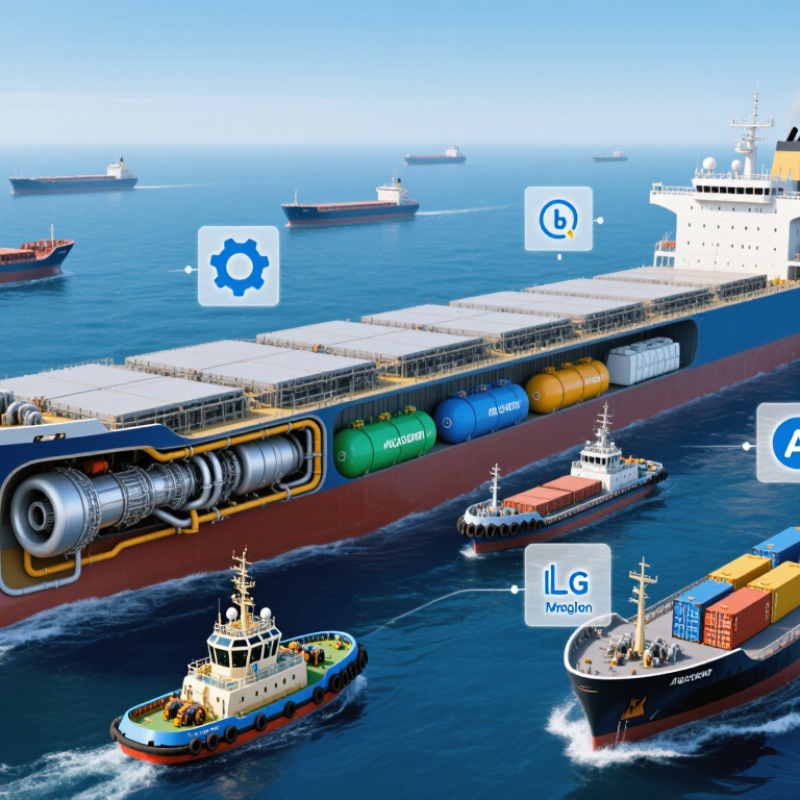
2026 Top Marine Engine Companies for Global Buyers

Marine Engine Industry Overview and Global Buyer Requirements

2026 Top Marine Engine Companies for Global Buyers

Marine engine buyers now compare more than horsepower and purchase price. They assess reliability, fuel consumption, emissions compliance, and service access. A suitable engine must match the vessel’s hull, load profile, operating waters, and duty cycle. Continuous commercial work demands different engineering than occasional coastal use. Fit matters. An oversized engine may waste fuel, while an undersized unit can suffer thermal stress and premature wear.

Global buyers should request verified test data, maintenance records, warranty terms, and parts availability before signing a contract. Inspection should include cylinder compression, cooling-system pressure, oil analysis, exhaust condition, and electronic fault history. Sea trials are especially valuable. They reveal vibration, overheating, unstable speed, and poor acceleration under real load. Records matter. A clean exterior proves very little.

Regional requirements also shape the buying decision. Engines may need certification for emissions, noise, safety, or classification rules in the operating country. Buyers should confirm technician coverage, response times, training, and delivery routes for critical components. A low initial price can become expensive when a vessel waits weeks for a simple sensor. That is risky. Even experienced teams can overlook fuel quality, saltwater corrosion, or incompatible control systems. A practical specification sheet should list these details clearly, while leaving room for independent inspection and technical review.

Key Technologies Shaping Marine Engine Performance in 2026

Key Technologies Shaping Marine Engine Performance in 2026

Marine engine development is moving from maximum power toward lower emissions and flexible fuel use. The IMO’s Fourth Greenhouse Gas Study estimated that international shipping produced about 2.89% of global anthropogenic greenhouse gas emissions in 2018. Its 2023 strategy now targets net-zero emissions by around 2050. These targets are pushing engine makers toward dual-fuel systems, methanol readiness, ammonia research, and improved combustion control.

Digital monitoring is becoming equally important. Sensors now track cylinder pressure, exhaust temperature, vibration, and fuel quality during voyages. Operators can detect injector wear before black smoke appears at the funnel. Waste-heat recovery, variable-speed generators, and selective catalytic reduction can reduce wasted energy and nitrogen oxides. DNV’s Maritime Forecast to 2050 identifies efficiency, alternative fuels, and onboard digitalization as major development pathways. The technology is advancing quickly.

Battery hybrid systems suit ferries, harbor craft, and vessels with frequent port calls. Larger ships still face difficult energy-density limits. The IEA notes that low-emission hydrogen-based fuels require major expansion in clean production and infrastructure. That gap matters. An engine may be technically ready, but a reliable fuel supply may not exist at the next port. Buyers should therefore examine fuel flexibility, maintenance access, crew training, lifecycle emissions, and verified sea-trial data. Promises on paper are not enough. Some forecasts may also prove too optimistic.

2026 Top Marine Engine Companies for Global Buyers – Key Technologies Shaping Marine Engine Performance in 2026

Technology Area Primary Performance Metric Verified 2026-Relevant Fact Typical Marine Application Buyer Benefit Main Design Constraint
IMO NOx Tier III compliance NOx emissions in regulated areas Tier III applies to qualifying marine diesel engines operating in designated NOx Emission Control Areas and generally requires about 80% lower NOx emissions than Tier II. Newbuild ocean-going vessels entering NOx ECAs Supports regulatory access and reduces local air-pollution impact. Additional equipment, exhaust backpressure, urea handling, and maintenance requirements.
Selective Catalytic Reduction (SCR) NOx conversion efficiency SCR systems use an ammonia-based reagent, normally urea solution, to convert NOx into nitrogen and water in the exhaust system. Medium- and high-speed engines; vessels operating in NOx ECAs Enables continued use of conventional liquid fuels while meeting stringent NOx limits. Requires reagent storage, dosing control, catalyst temperature management, and periodic catalyst inspection.
Dual-fuel engine architecture Fuel flexibility and operating continuity Modern dual-fuel engines can switch between a gaseous or low-carbon fuel and a liquid marine fuel, subject to engine configuration and fuel availability. Container ships, LNG carriers, cruise ships, ferries, and offshore vessels Reduces dependence on one fuel supply chain and supports phased decarbonization. Higher capital cost, more complex fuel systems, and dependence on port bunkering infrastructure.
Methanol-capable propulsion Well-to-wake carbon intensity Methanol can be stored as a liquid at ambient conditions; emissions performance depends strongly on whether the fuel is fossil-based, bio-based, or produced using renewable electricity. Deep-sea cargo vessels and short-sea shipping Simplifies fuel handling compared with cryogenic fuels and offers a pathway to lower lifecycle emissions. Lower volumetric energy density than conventional marine fuel requires larger fuel tanks or more frequent bunkering.
Ammonia-ready propulsion Carbon-free fuel operation at point of use Ammonia contains no carbon, so engine combustion does not directly produce CO2 from the fuel; however, NOx, nitrous oxide, and ammonia slip must be controlled. Large ocean-going vessels and future green-fuel corridors Offers a potential route toward very low lifecycle greenhouse-gas emissions when produced with low-carbon energy. Toxicity, low flammability, fuel-tank volume, crew training, and limited bunkering availability.
Hydrogen and fuel-cell systems Electrical efficiency and local emissions Hydrogen fuel cells can produce electricity without combustion-related NOx at the point of use; overall climate performance depends on hydrogen production. Ferries, harbor craft, workboats, and selected short-range vessels Very low local air emissions and quiet operation. Hydrogen storage, low volumetric energy density, fuel cost, and limited maritime distribution infrastructure.
Battery-electric and hybrid propulsion Fuel savings, peak-load reduction, and zero-emission operating time Battery systems are most practical where routes are short, schedules are predictable, and shore charging is available; hybrid systems can reduce engine operation during low-load periods. Ferries, inland vessels, harbor tugs, and offshore support vessels Reduces fuel consumption, noise, vibration, and engine maintenance during suitable operating cycles. Battery mass, charging time, thermal management, fire protection, and limited range for deep-sea service.
Waste-heat recovery Net specific fuel consumption Exhaust-gas economizers, turbo-compounding, and steam or organic Rankine-cycle systems recover part of the thermal energy that would otherwise be released to the atmosphere. Large, continuously operated main engines Improves overall propulsion-system efficiency without changing the primary fuel. Economic value decreases at low engine loads; equipment adds weight, space, and maintenance needs.
Digital engine monitoring Fuel consumption, availability, and predictive-maintenance accuracy Connected sensors and analytics can track cylinder pressure, exhaust temperature, vibration, fuel flow, and lubricant condition to identify abnormal trends. Commercial fleets, offshore vessels, and remotely supported ships Supports condition-based maintenance, lower unplanned downtime, and more transparent fuel-performance reporting. Sensor reliability, cybersecurity, data integration, and the quality of onboard operating data.
EEXI and CII optimization Energy efficiency and carbon intensity per transport work The IMO's EEXI framework addresses the technical efficiency of existing ships, while CII measures annual operational carbon intensity and assigns performance ratings. Existing commercial vessels and newbuilds subject to IMO efficiency rules Helps owners combine engine selection, speed management, routing, and retrofit decisions to meet compliance targets. Efficiency improvements may reduce speed or cargo flexibility and require verified operational data.
Low-friction and advanced lubrication Mechanical efficiency and component wear Cylinder-oil feed-rate optimization, electronically controlled lubrication, and compatible low-friction coatings can reduce wear and parasitic losses when correctly matched to the fuel and engine design. Two-stroke and four-stroke marine engines Can lower lubricant consumption and support longer maintenance intervals. Incorrect lubricant selection or excessive feed-rate reduction can increase corrosion and liner wear.

Note: Actual engine performance varies by engine rating, vessel type, operating profile, fuel quality, maintenance condition, and applicable emissions regulations.

Leading Marine Engine Companies and Their Product Portfolios

2026 Top Marine Engine Companies for Global Buyers

Leading Marine Engine Companies and Their Product Portfolios

In 2026, marine engine companies compete through complete, clearly documented portfolios, not horsepower alone. Global buyers usually compare propulsion engines, auxiliary generator sets, and integrated control systems. A coastal workboat may need compact, high-torque diesel power. An ocean vessel may require efficient, continuous-duty performance. Hybrid-ready options are also expanding. They combine engines, batteries, inverters, and energy-management software. The practical difference appears at the helm, not in a brochure.

Leading suppliers organize portfolios by vessel type, duty cycle, fuel, and service access. Their ranges may include diesel, gas, dual-fuel, and electric systems. Buyers should inspect rated power, torque curves, fuel consumption, dimensions, dry weight, and cooling arrangements. A 500-kilowatt engine can be a poor fit when service clearance is limited. Ask for installation drawings and verified test data. Look beyond peak output. Independent testing, class approvals, and documented service records strengthen supplier credibility.

For commercial operators, modular parts, remote diagnostics, and trained technicians can reduce downtime. Certification records and emissions compliance should match the vessel’s operating region. Independent trials often expose details sales sheets miss, including vibration, cold starting, and fuel use under changing loads. No portfolio is perfect. Some advanced systems remain costly or difficult to repair in remote ports. That weakness matters. Buyers should compare warranty terms, spare-part lead times, lifecycle costs, and technician coverage before signing. A reliable company explains limitations plainly and supports the engine after delivery.

How to Compare Marine Engines for Different Vessel Types

2026 Top Marine Engine Companies for Global Buyers

How to Compare Marine Engines for Different Vessel Types

Choosing a marine engine starts with the vessel’s real working profile, not its advertised horsepower. A lightweight yacht may need smooth acceleration and low vibration. A fishing boat often needs steady torque during long, slow operations. Ferries require dependable starts, frequent load changes, and accessible service points. Heavy workboats usually need strong low-speed performance, durable cooling systems, and simple maintenance at remote docks.

Compare engines by duty cycle, displacement, propeller requirements, fuel use, and operating hours. A high-rated engine may perform poorly if it constantly works below its efficient range. During sea trials, record engine speed, coolant temperature, fuel consumption, and vibration under realistic loads. Short tests can hide problems. Check certification, emissions compliance, spare-part availability, and technician training in the vessel’s operating region. These details often matter more than a small difference in peak power.

I have seen buyers focus on output figures and overlook installation space. That mistake becomes expensive later. Measure access around filters, belts, injectors, and control systems before signing a purchase agreement. Electric or hybrid systems may suit harbor vessels, but battery weight and charging limits deserve careful review. A spreadsheet helps, although it can still mislead. Weather, fouled hulls, poor propeller matching, and inexperienced operators change results. Ask an independent marine engineer to verify the load calculation and inspect the engine after a monitored trial. Recheck every assumption.

2026 Top Marine Engine Companies for Global Buyers

How to Compare Marine Engines for Different Vessel Types

Typical main-propulsion power requirements vary substantially by vessel type. Workboats and fishing vessels generally prioritize compact installation and fuel efficiency, while ferries, tugs, coastal cargo vessels, and ocean-going ships require progressively higher continuous power. The ranges shown are representative engineering benchmarks; actual requirements depend on displacement, hull design, operating speed, route, load condition, and regulatory requirements.

Unit: kW of typical total main propulsion power. Values represent common market ranges rather than company or brand specifications.

Purchasing, Compliance, Maintenance, and After-Sales Considerations

For global marine-engine buyers, purchasing starts with the vessel’s real operating profile. Record annual running hours, load patterns, fuel quality, ambient temperature, and port restrictions. A coastal workboat needs different torque behavior than an ocean-going cargo vessel. Over 80% of global trade moves by sea, according to UNCTAD’s Review of Maritime Transport 2024. That scale makes an apparently small efficiency loss expensive. Ask suppliers for verified fuel-consumption curves, emissions documentation, spare-parts lead times, and technician coverage. Marketing estimates are not enough.

Compliance must be checked before signing the purchase order. The IMO’s Fourth GHG Study estimated shipping produced 2.89% of global anthropogenic emissions in 2018. Its 2023 strategy targets net-zero emissions from international shipping near 2050. Buyers should therefore confirm compatibility with sulfur limits, emissions-control areas, carbon reporting, and future fuel changes. Engine certification, installation records, and onboard monitoring systems must match the vessel’s flag and trading routes. Rules can change faster than procurement cycles. That risk is often underestimated.

Maintenance planning should begin during specification, not after failure. Require digital service histories, diagnostic access, training, and critical-part inventories near operating ports. DNV’s Maritime Forecast to 2050 highlights uncertainty around fuel availability and technology pathways. A dual-fuel system may reduce future exposure, but it can also increase maintenance complexity. Some assumptions fail. After-sales contracts should define response times, warranty boundaries, remote support, overhaul procedures, and technician qualifications. Review actual service cases, not only promised coverage. A cheap engine can become costly when one seal, sensor, or injector delays a vessel for several days.

FAQS

How should buyers compare marine engines for different vessels?

Start with the vessel’s working profile, not advertised horsepower. A fishing boat needs steady torque during long, slow operations. A ferry needs reliable starts and frequent load changes. Heavy workboats need durable cooling and simple maintenance. Peak power can mislead.

Which technical specifications deserve close attention?

Compare rated power, torque curves, fuel consumption, dimensions, and dry weight. Check displacement, propeller requirements, cooling arrangements, and operating hours. A compact engine may fit better than a stronger engine. Measure service clearance around filters, belts, injectors, and controls. Space matters.

What should a buyer record during sea trials?

Record engine speed, coolant temperature, fuel use, and vibration. Test the engine under realistic loads and changing conditions. Short trials can hide cold-start or overheating problems. Check performance with realistic weather and vessel loading. Repeat the test if results seem unusually good.

Are electric and hybrid marine systems suitable for every vessel?

They may suit harbor vessels with predictable routes and charging access. Battery weight, charging limits, and installation space require careful review. Hybrid systems can combine engines, batteries, inverters, and energy software. Remote ports may complicate repairs. That weakness matters.

What compliance documents should buyers request?

Request engine certification, emissions records, installation documents, and monitoring requirements. Confirm compatibility with the vessel’s flag and trading routes. Check fuel rules and emissions-control requirements before signing. Regulations may change during the procurement cycle. Do not assume.

How can buyers reduce maintenance-related downtime?

Require digital service histories, diagnostic access, technician training, and critical spare parts. Check parts availability near the vessel’s regular operating ports. Ask for response times and overhaul procedures in writing. One failed sensor can delay a vessel for days. Small parts matter.

What should an after-sales agreement include?

Define warranty limits, remote support, response times, and technician qualifications. Clarify which repairs require approval and which parts remain covered. Review actual service cases, not only promised coverage. A lower purchase price may create higher lifecycle costs. Recheck the assumptions.

How can buyers judge whether an engine is truly cost-effective?

Compare fuel use, maintenance, downtime, spare-part delivery, and technician coverage. Review performance across the expected duty cycle, not only maximum output. Consider fuel quality, ambient temperature, hull condition, and propeller matching. A spreadsheet helps, but it can still mislead. Independent verification is wise.

Conclusion

The 2026 marine engine market is defined by stronger demands for fuel efficiency, lower emissions, reliable operation, and adaptable performance across commercial, industrial, and recreational vessels. Global buyers must evaluate how engine power, propulsion compatibility, digital monitoring, hybrid readiness, alternative fuels, noise control, and lifecycle efficiency align with vessel size, operating conditions, and regional environmental requirements. Marine Engine Com can help readers understand the main factors shaping modern engine selection without focusing on any single manufacturer.

This overview also explains how to compare engine portfolios according to vessel type, duty cycle, power needs, installation space, and expected operating hours. Beyond the initial purchase price, buyers should consider certification, documentation, warranty coverage, spare-parts availability, technician support, maintenance intervals, fuel consumption, and long-term service responsiveness. A careful purchasing process combines technical specifications with compliance planning and total cost analysis, helping owners select dependable marine propulsion solutions that support safe, efficient, and sustainable operations in 2026 and beyond.


Liam

Liam

Liam is a dedicated marketing professional with a profound expertise in the industry, where he excels at highlighting the unique advantages of our core products. With a keen understanding of market trends and consumer needs, Liam frequently updates our company’s professional blog, providing......